
Key takeaways
- Workaholism is compulsive, not circumstantial. It differs from a hard worker going through a busy season.
- A 2016 study of 16,426 workers found 7.8% met workaholism criteria, with strong links to anxiety and ADHD.
- The damage isn't only lost time. It's emotional absence, asymmetric home load, and intimacy deferred indefinitely.
- Both partners carry a valid story. The gap between those two accounts is where most of the fights actually live.
- Small, consistent micro-moments of connection repair trust faster than one big weekend away.
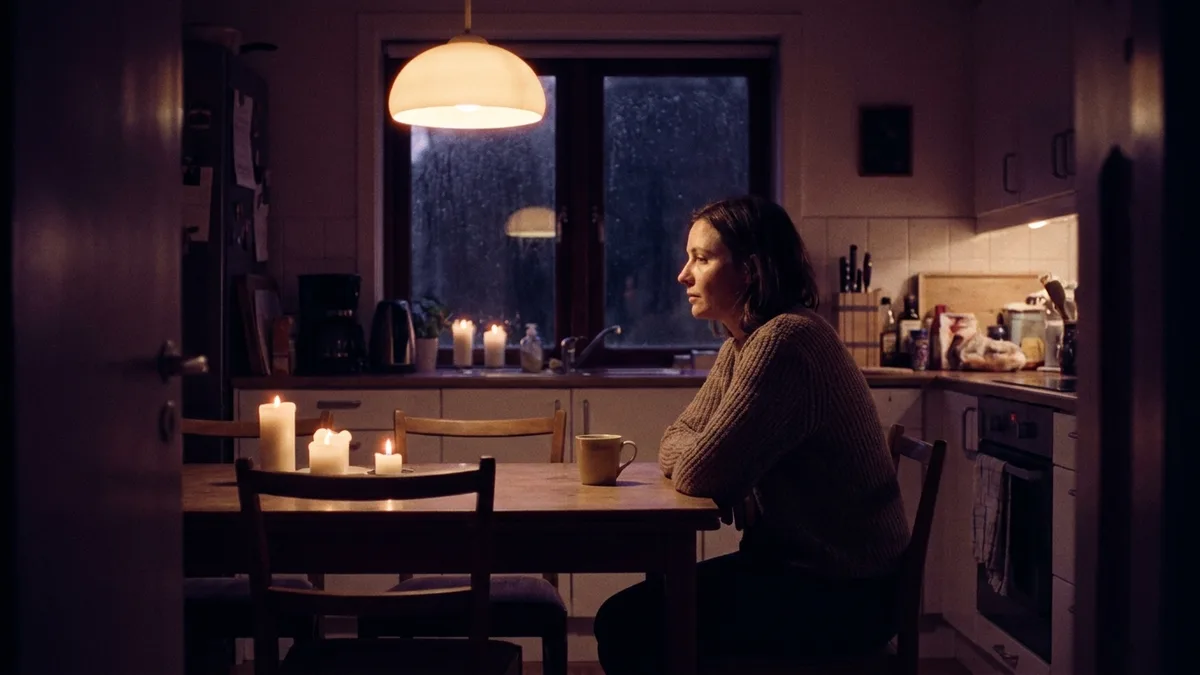
Workaholic relationship problems rarely announce themselves. They accumulate. One cancelled dinner. A phone face-up at the table. A work call at 10 PM that "should only take five minutes." Nobody makes a decision to deprioritize their partner. It just happens, slowly, until the one at home stops expecting anything different.
The hours are only part of the story. The part that actually damages a relationship is the emotional absence that comes with them, and the gap between what each person thinks is happening.
What makes someone a workaholic, not just a hard worker
A workaholic can't switch off even when the work is done, even when their partner is right there. That's the key distinction: a hard worker responds to external demand; a workaholic responds to internal compulsion. The hours are a symptom, not the cause. A hard worker goes through demanding seasons. They know it, say so, and come home exhausted but present.
A 2016 study published in PLoS One analyzed 16,426 workers across industries and found that 7.8% met clinical criteria for workaholism. Among those, 33.8% screened positive for anxiety and 32.7% showed ADHD symptoms. The researchers found that workaholism wasn't primarily about ambition or external workload. It was linked to psychiatric patterns, suggesting the compulsion to overwork often functions as a way of managing internal discomfort rather than responding to actual demand.
| Hard worker | Workaholic | |
|---|---|---|
| Driven by | Tasks and real deadlines | Internal compulsion |
| Can disconnect when tasks end? | Yes | Rarely, even when wanted |
| Work expands into free time? | Sometimes, by choice | Almost always |
| Guilt when not working? | Occasional | Frequent and intense |
| Acknowledges the relationship impact? | Usually | Often genuinely blind |
| Responds to structure and limits? | Yes | Resists, often sincerely |
The distinction matters because the solution is different. Hard workers need rest and better structure. Workaholics often need to understand what they're actually running from.
How overwork erodes a relationship
Overwork damages a relationship by creating emotional absence. Even when both people live under the same roof, one person is consistently somewhere else. Over time, that absence erodes shared rituals, creates an uneven domestic load, defers intimacy indefinitely, and prevents the conversations that actually matter.
The harm doesn't arrive as a single crisis. It layers across five areas.
Emotional absence. Being physically present while mentally somewhere else is its own kind of loneliness. Partners of workaholics often describe feeling more isolated than they would in an empty house: the person is there, but not fully present.
The loss of small rituals. The repeated, ordinary things: meals together, morning coffee, ten minutes at the end of the day. These are what maintain the feeling of being on the same team. When work colonizes those moments, the relationship starts running on logistics instead of connection.
Asymmetric home load. When one partner is always depleted or unavailable, the other absorbs what's left. Domestic tasks, childcare, emotional management, social planning: these fall to whoever is present. That imbalance builds resentment steadily, even in relationships where both people believe they're trying.
Intimacy deprioritized. Physical and emotional closeness tends to be the first thing deferred when someone is perpetually exhausted. Months of deferral starts to feel like rejection, even when that was never the intention.
The conversations that don't happen. Future plans, unresolved hurt, things that actually matter. These need space to breathe. When the relationship runs on task-sharing and logistics, the real conversation keeps getting postponed until the postponement itself becomes the problem.
What each partner is actually experiencing
Both people are experiencing a real, valid version of the same relationship. The one at home feels invisible; the one working feels unrecognized. Neither account is wrong. The trouble is that each partner often has no idea what the other is actually carrying. This is where most attempts to fix it go wrong.
| The partner at home sees | The workaholic sees |
|---|---|
| Invisibility. Coming second to a screen. | Sacrifice. Providing. Carrying something hard. |
| A relationship that feels like a living arrangement | A partner who seems unable to appreciate the effort |
| An uneven load and growing isolation | Pressure from every direction, no neutral ground at home |
| Intimacy gone quiet, connection deferred | Exhaustion mistaken for coldness or disinterest |
| "You chose work over me." | "I'm doing this for us. Why aren't you seeing it?" |
Research on the spillover-crossover process (Bakker et al., 2009) found that the strain workaholism creates doesn't stay contained at work. It crosses over to the partner, reducing their wellbeing and relationship satisfaction independently. Both people end up running on empty, from entirely different directions, without either fully understanding what the other is carrying.
When neither person can see the other's version, the argument about work hours becomes a surface-level fight standing in for a much deeper standoff about feeling seen.
Why workaholics often can't see the damage
The behavior causing visible harm to the relationship often registers as invisible to the person creating it. Work delivers clear, legible feedback: progress reports, revenue, completed projects. Relationships don't. When identity is tied to achievement, any critique of work habits can land as a critique of who you are.
Part of this is cognitive. When being a provider, builder, or high performer is central to someone's self-image, a partner saying "you work too much" can trigger an immediate defense. The behavior gets reframed as necessary, temporary, or actually an expression of love: "I'm doing this for us."
Part of it is how work is designed to reward. When the nervous system has been trained to find safety in visible achievement, it keeps returning there even at significant personal cost. This doesn't make workaholics careless. It makes them humans running a pattern that made sense at some point and now happens to hurt the people closest to them.
Seven moves that actually help
| Move | What it's designed to address |
|---|---|
| Name the feeling, not the hours | Opens conversation instead of triggering defense |
| One protected, repeatable moment | Rebuilds trust through consistency, not grand gestures |
| Weekly five-minute sync | Makes the workaholic's schedule legible instead of appearing without warning |
| Address the home-load imbalance | Acknowledges what was absorbed and rebalances it |
| Ask: who am I when I'm not producing? | Surfaces the identity driver underneath the overwork |
| Explicit repair signal after arguments | Prevents silence from calcifying into resentment |
| Get curious before getting louder | "What do you need from me right now?" changes more than almost anything else |
Name the feeling, not the hours. "I feel invisible when you open the laptop as soon as you're home" lands differently than "you work too much." The first is something to understand. The second is something to argue about.
Pick one protected moment and hold it. Not a month of better balance. One specific thing: dinner without devices on Wednesdays, no email before 9 AM on weekends. Something concrete and repeatable. Consistency here builds trust faster than a spectacular weekend away that doesn't repeat.
Start a short weekly sync. Five minutes, ideally Sunday evening: what's heavy at work this week, what matters at home, what might flex. When the workaholic's schedule stops appearing as sudden surprises, the partner at home has something to work with rather than absorb.
Address the home-load imbalance directly. If one partner absorbed extra responsibility during a stretch of overwork, that needs acknowledgment. Not as a scorecard, but as recognition. What was carried, who carried it, what shifts. Both the practical redistribution and the verbal recognition matter.
Ask: who am I when I'm not producing? The partner who overworks usually needs to sit honestly with this question. If the answer feels blank or frightening, that's important information. It's worth exploring with outside support, including tools designed to go beneath the surface.
Create an explicit repair signal after arguments. Couples who fight about work and then go quiet tend to calcify. An agreed-upon signal: a phrase, a gesture, something low-stakes that means "I want to come back to us." Use it, even awkwardly, after difficult conversations.
Get curious before getting louder. "What do you actually need from me right now?" asked calmly, and genuinely listened to, changes more conversations than almost any other single move.
When the pattern is entrenched
If you have tried the above and keep arriving at the same place, the issue isn't effort. It's that both people need a space to be honest without managing the other's reaction in real time.
Lack of communication often sits just beneath these patterns. That's where outside support earns its keep. Adoree is designed precisely for this gap: each partner talks privately about what's actually happening, and what comes back is the real picture from both sides, without either person having to navigate the other's defenses to get there. Learn more about who we are and how we work.
If only one partner is willing to examine the pattern, individual support is also valid. You don't need permission to understand your own experience. How to communicate with a partner who pulls away is a related read worth having.
The things worth protecting here are real. Most workaholic relationship problems aren't signs that the partnership is wrong. They're signs that something true needs to be said, and that both people need to be in the room when it is.
Frequently asked questions
How do I know if my partner is a workaholic or just going through a busy season?
A busy season has a defined end and your partner acknowledges it's temporary. Workaholism is compulsive: work expands to fill any free time, guilt appears when they step away, and the pattern continues even when the relationship is visibly suffering. The key difference is whether they can stop when circumstances allow; workaholics often cannot.
Can a workaholic actually change?
Yes, but the change has to come from inside. Agreeing to work less under pressure rarely holds. Lasting shifts happen when the person understands the underlying driver: anxiety, fear of failure, or identity built entirely on output. That usually takes honest self-examination, often with outside support.
Should I give my partner an ultimatum about their work?
Ultimatums create short-term compliance but rarely lasting change. Naming the specific emotional impact on you, then asking your partner what they think is happening, tends to open a more honest conversation. The gap between those two accounts is usually where the real issue lives. That's where repair has to start.
What if I'm the workaholic in the relationship?
Ask your partner, without defending yourself, what their daily experience actually feels like. Most workaholics are surprised by the answer. Then identify one specific, repeatable change and hold to it for at least sixty days before adding more. Consistency here matters far more than the size of the change.
How can Adoree help when work is damaging a relationship?
Adoree talks to both partners separately: the one who overworks and the one who feels left behind. Each person shares what's really happening without managing the other's reaction. What surfaces is an honest picture from both sides, plus a clear action plan. You can access it any time, including at 11 PM after the laptop finally closes.
Meet Adoree.
Adoree is an AI relationship assistant built for couples. It hears both partners privately, remembers everything, and helps you actually move forward. Free for 3 days.
Try Adoree free →Your version of this
You just read about the pattern. Tell me yours — I’ll tell you which one you’re in.
Three messages, free, no sign-up. Nothing is saved unless you keep it.
References
- The Relationships between Workaholism and Symptoms of Psychiatric Disorders: A Large-Scale Cross-Sectional Study. Andreassen CS, Griffiths MD, Sinha R, Hetland J, Pallesen S. PLoS One (2016). https://pmc.ncbi.nlm.nih.gov/articles/PMC4871532/
- Workaholism and Relationship Quality: A Spillover-Crossover Perspective. Bakker AB, Shimazu A, Leiter M, Taris TW, Schaufeli WB. Journal of Occupational Health Psychology (2009). https://www.researchgate.net/publication/24001197_Workaholism_and_Relationship_Quality_A_Spillover-Crossover_Perspective