
adoree Ask me in one tap
Key takeaways
- Recurring fights are normal. Gottman research shows 69% of couple conflicts are perpetual problems that never fully resolve.
- The surface issue is rarely the real issue. Most cycles are driven by unmet needs like feeling unheard, unseen, or unsafe.
- A 20-minute pause can interrupt the stress response and prevent escalation.
- Repair attempts, like humor or a gentle touch mid-argument, predict relationship success more than avoiding conflict.
- Constant fighting becomes damaging when it includes criticism, contempt, defensiveness, or stonewalling.
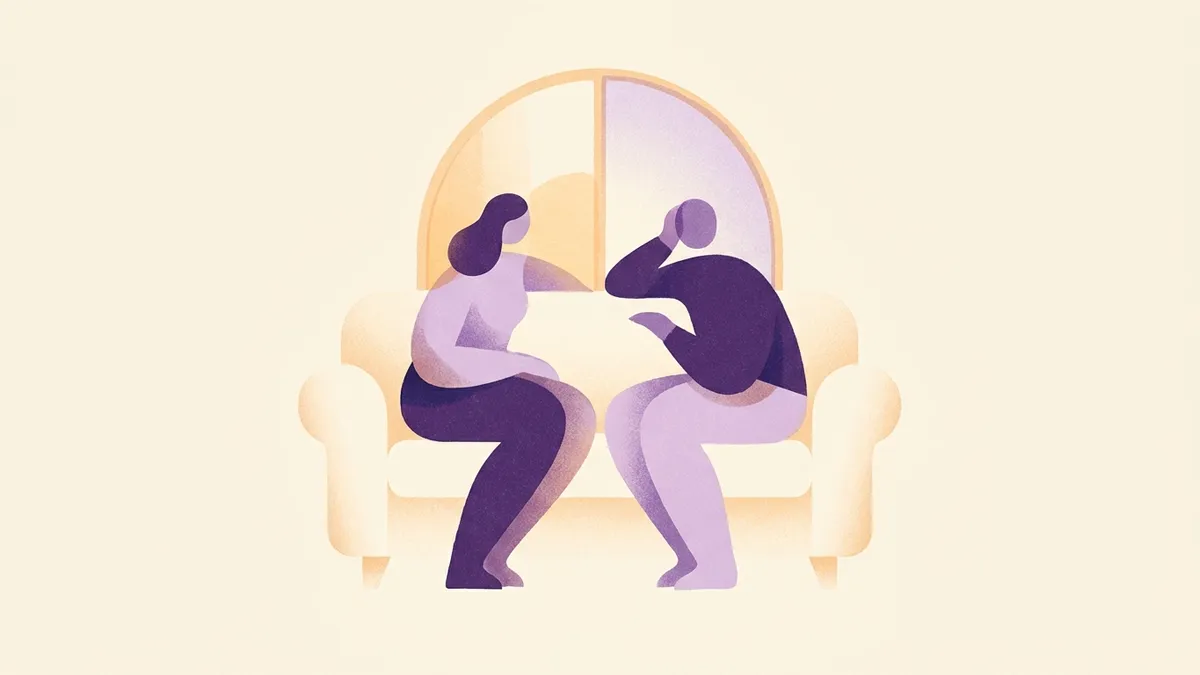
Why do couples keep fighting about the same thing?
Most couples who fight in cycles aren't actually arguing about what they think they're arguing about. The dish left in the sink, the text that went unanswered, the plans made without checking in first. These are triggers, not causes. Underneath almost every recurring fight is an unmet emotional need: feeling unheard, unseen, or taken for granted.
How to stop the cycle of fighting in a relationship starts with understanding this gap between the surface complaint and the deeper need driving it. Dr. John Gottman's research at the University of Washington found that 69% of couple conflicts are perpetual problems. They never fully resolve because they're rooted in genuine personality differences, not solvable misunderstandings. That's not a death sentence for the relationship. It's just how human partnerships work.
The question isn't whether you'll fight. It's whether you'll fight in ways that bring you closer or push you further apart.
What does constant fighting in a relationship actually look like?
Constant fighting in a relationship doesn't always mean screaming matches. Sometimes it's quieter than that. It's the cold shoulder after breakfast. The sarcastic comment that lands harder than intended. The same conversation looping every few weeks with nothing changing.
Here's how to tell the difference between healthy disagreement and a destructive cycle:
| Healthy conflict | Destructive cycle |
|---|---|
| Both people feel heard afterward | One or both feel dismissed |
| The issue gets resolved or accepted | The same issue returns unchanged |
| Repair happens naturally | Tension lingers for hours or days |
| You fight about the issue | You fight about how you fight |
| 5:1 positive-to-negative ratio holds | Negativity outweighs connection |
The Gottman Institute's research identified four behaviors that predict relationship failure with over 90% accuracy: criticism, contempt, defensiveness, and stonewalling. They called these the "Four Horsemen." If your fights regularly include any of these, the cycle is doing real damage.
How do you stop fighting in a relationship without just avoiding conflict?
You don't stop fighting. You stop fighting badly. Avoidance creates distance, and distance creates resentment. What actually works is changing the shape of the fight itself.
Recognize the pattern, not just the topic. Next time you're mid-argument, pause and ask yourself: Have we been here before? What's the feeling underneath the complaint? Usually it's some version of "I don't feel like I matter to you right now."
Use a 20-minute pause. When your heart rate crosses about 100 beats per minute, your ability to listen drops dramatically. This is physiological, not a character flaw. Tell your partner: "I want to finish this conversation, but I need 20 minutes to calm down first." Then actually come back.
Lead with what you need, not what they did wrong. "I need to feel like my opinion counts when we make plans" lands differently than "You never include me in decisions." The first invites collaboration. The second invites defense.
What's really driving the cycle?
Every recurring fight has a structure. Therapists who work with couples see the same architecture over and over:
- A trigger fires. Something happens (or doesn't happen) that touches a raw spot.
- Each partner reacts from their position. One pursues and presses for resolution. The other withdraws to protect themselves.
- The reaction confirms the fear. The pursuer feels abandoned. The withdrawer feels attacked. Both are right about their own experience and wrong about their partner's intent.
- The cycle resets. Nothing gets resolved. The tension drops temporarily, then the same trigger fires again.
This is what therapists call the pursue-withdraw cycle, and it's the most common conflict pattern in relationships. Neither partner is the villain. Both are responding to the same loop from different positions.
Understanding this pattern is half the work. When you can say, "We're doing the thing again," you've already interrupted the autopilot.
| Pursuer says | Withdrawer says | What both actually need |
|---|---|---|
| "You never talk to me" | "I need space" | To feel safe enough to connect |
| "Why don't you care?" | "I'm shutting down" | To know the relationship is secure |
| "We need to fix this now" | "Can we just drop it?" | A way to address the issue without flooding |
How repair attempts change everything
Gottman's most striking finding isn't about what couples fight about. It's about what happens during the fight. Repair attempts, those small moments where one partner tries to de-escalate, predict relationship success more reliably than almost any other factor.
A repair attempt can be:
- A joke in the middle of tension
- Reaching for your partner's hand
- Saying "I'm sorry, let me try that again"
- A silly face that breaks the intensity
- "I know we're fighting, but I still love you"
The repair itself doesn't have to be perfect. What matters is whether your partner accepts it. In relationships stuck in a destructive cycle, repair attempts get ignored or rejected. The partner making the bid feels foolish. They stop trying. That's when the real erosion begins.
If you want to stop fighting in a relationship, start by noticing repair attempts, both yours and your partner's, and accepting them even when you're still angry.
Is fighting healthy in a relationship?
Some fighting is not just normal but necessary. Conflict is how two separate people negotiate shared space, time, money, and values. Couples who never fight often aren't more compatible. They're more avoidant.
The research is clear: it's not whether you fight that predicts whether your relationship lasts. It's how you fight. Gottman's 5:1 ratio means that stable, happy couples still have plenty of negative interactions. They just have five times as many positive ones to balance them out.
Fighting becomes unhealthy when:
- It includes contempt (eye-rolling, name-calling, mockery)
- One partner consistently shuts down or walks away
- There's no repair afterward
- The same fight escalates further each time
- Physical safety is ever in question
What to do when you can't break the cycle on your own
If you've tried pausing, tried "I" statements, tried naming the pattern, and the cycle still runs, that's not a failure. Some patterns are too embedded for two people to see clearly from inside them. You need a third perspective.
That's where tools like Adoree come in. Adoree is an AI relationship assistant that talks to both partners separately, hears each side without judgment, and helps you see the pattern you're both stuck in. It doesn't replace professional help for serious issues, but for couples caught in the everyday loop of the same recurring fight, having something that holds both perspectives at once can be the interruption the cycle needs.
You can also explore what happens when arguing crosses a line or learn how to reconnect after the distance conflict creates.
The cycle doesn't have to be permanent. But breaking it requires seeing it clearly, and that's hard to do when you're standing inside it.
Frequently asked questions
Is fighting healthy in a relationship?
Some conflict is healthy and even necessary. What matters is how you fight, not how often. Gottman's research shows that stable couples maintain a 5:1 ratio of positive to negative interactions during conflict. Fighting becomes unhealthy when it involves contempt, personal attacks, or emotional withdrawal.
How much fighting is too much in a relationship?
There's no set number, but constant fighting that leaves both partners feeling drained, distant, or hopeless signals a problem. If most conversations turn into arguments, or if you've stopped repairing after fights, it's time to look at the underlying pattern rather than the individual disagreements.
Why do couples keep having the same fight?
Roughly 69% of couple conflicts are perpetual, meaning they stem from fundamental differences in personality, values, or needs. The fight about dishes is really about feeling unsupported. The argument about spending is really about security. Recognizing the deeper need is the first step toward breaking the loop.
Can a relationship survive constant fighting?
Yes, if the fighting shifts from destructive to constructive. Relationships don't end because of conflict. They end because of how couples handle it. Couples who learn to fight without contempt, who repair after ruptures, and who stay curious about each other's perspective can move through even intense conflict.
Ask Adoree
Same fight, again? Tell me how it goes — I'll show you the loop you're both stuck in.
References
- Everything Turns Into an Argument: How to Break the Conflict Cycle. The Gottman Institute. https://www.gottman.com/blog/everything-turns-into-an-argument/
- Why 69 Percent of Couples' Conflicts Will Never Go Away. Psychology Today (2025). https://www.psychologytoday.com/us/blog/social-instincts/202512/why-69-percent-of-couples-conflict-will-never-go-away
- The Seven Principles for Making Marriage Work. John Gottman, Ph.D. (2015). https://www.gottman.com/product/the-seven-principles-for-making-marriage-work/