
Key takeaways
- Michael and Michal's conflict was a classic pursuer-withdrawer dynamic: she escalated, he withdrew, both felt misunderstood.
- Dr. Guralnik helped them map a six-step negative cycle so they could see the loop as shared, not personal.
- Michal's driven energy traced back to absorbed family anxiety. Michael's passivity was partly fear, not indifference.
- Small, structured interventions, like a calmer homecoming ritual, can interrupt a long-running pattern.
- The couple stayed together after filming and welcomed a third child, evidence that naming a cycle can change it.
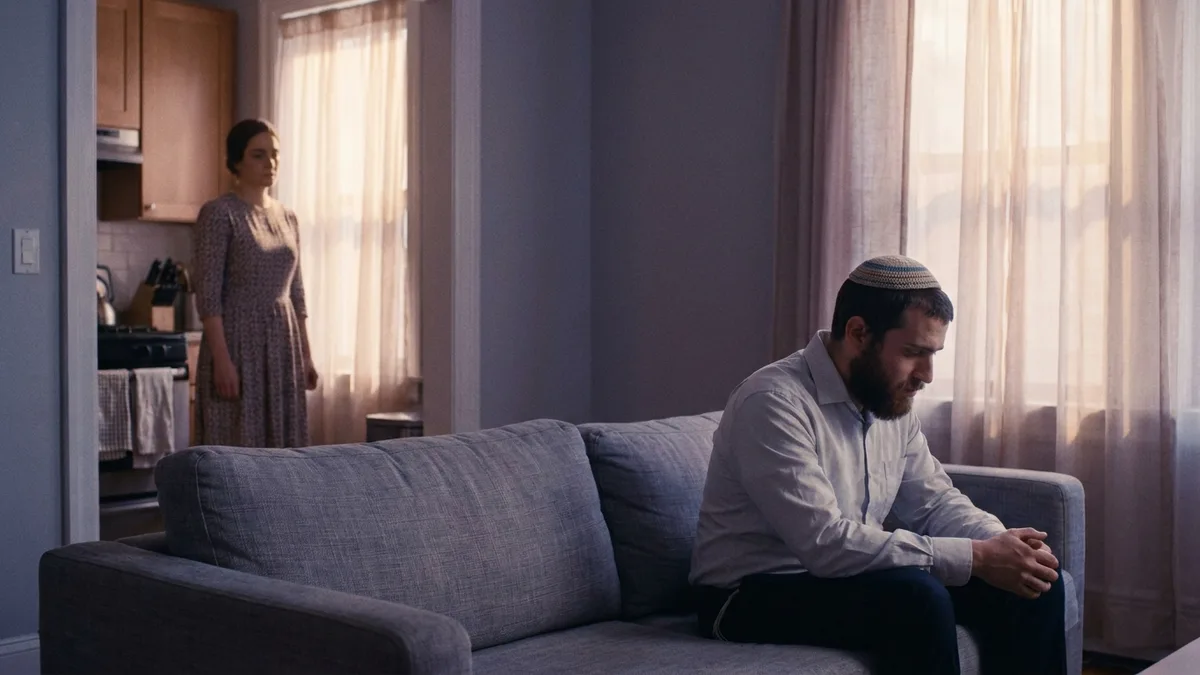
Michael and Michal were by any measure a successful couple. Married 11 years. Modern Orthodox. Two young kids. Brilliant, funny, deeply devoted to each other. And completely stuck.
She would explode over small things. He would freeze. Neither could understand why the person they loved most kept triggering the worst in them. That pattern brought them to the couch on Season 2 of Showtime's Couples Therapy with Dr. Orna Guralnik, and what happened there says something true about almost every long-term relationship.
Who Are Michael and Michal?
Michael and Michal are a New York couple who appeared on Couples Therapy Season 2, the Showtime docuseries in which Dr. Orna Guralnik, a psychoanalyst and clinical psychologist, works with real couples in real sessions. Unlike reality TV that manufactures drama, the show films actual therapy, unscripted.
By the time they arrived, the couple had been navigating a chasm that had slowly widened around the distribution of household labor and parenting. They had a new baby alongside older children. Michal was doing most of the running. Michael was not showing up in the ways she needed. The frustration had curdled into a cycle neither knew how to break.
What made their story resonate with viewers was not the drama. It was the recognition. That couple arguing about who did what and why nobody ever helps and why am I always the one who has to ask? That's most couples at some point.
The Six-Step Negative Cycle
The most striking thing Dr. Guralnik did with Michael and Michal was name the pattern. Not assign blame, not take sides. Name the cycle itself as a shared adversary.
Together, they mapped six steps:
| Step | What happens |
|---|---|
| 1. Lull | Relative calm; the cycle is dormant |
| 2. Driven | Michal steps up and carries the load |
| 3. Slide Back to Laziness | Michael disengages; his effort recedes |
| 4. Silent Resentment | Michal's frustration builds without release |
| 5. Explosion | The resentment erupts, often over something small |
| 6. Return | Temporary calm, until the next lull starts it again |
The breakthrough was not the map itself. It was that both partners could see themselves in it without the map meaning "you're the bad one." The cycle is the problem. Not her. Not him. The script they had both been handed.
Guralnik described it this way: couples become trapped in scripts that represent only a sliver of who they really are, shaped by early histories and what she calls errands passed down through family legacy. The therapist's job is to find the leverage point that lets them step out.
What Was Really Underneath It
When therapy reached the deeper layer, what emerged was this: Michal was not just frustrated about dishes or a baby that needed feeding. She was carrying anxiety that had been handed to her, absorbed from her family of origin into a kind of driven, never-stop-moving energy. The explosion was the pressure-release valve on a tank that was always full.
Michael was not lazy. He was scared. When Guralnik pressed past his initial denial, what surfaced was that coming home at the end of the day felt like approaching something unpredictable. His withdrawal was a fear response, not indifference. The fact that it looked like indifference made Michal feel even more alone, which kept the tank filling.
Each person's behavior was feeding the other's, invisibly. This is the nature of pursuer-withdrawer dynamics: neither partner can see their own contribution because they only feel the other person's move against them.
The Small Intervention That Mattered
Guralnik did not redesign their entire marriage. She prescribed homework for the homecoming moment: a structured, calm, benign and pleasant interaction when Michael walked through the door. A reset point. A tiny interruption in the script at the exact moment the loop had been starting.
It sounds small. But small is often what works. A single repeatable move that both partners can try beats a sweeping declaration every time. You do not rebuild a pattern in one conversation. You rebuild it by doing something different in the same moment, over and over, until the old groove loses its pull.
This is also what research on Gottman's four intervention points suggests: the more targeted and specific the change, the more likely it sticks. Sweeping "we need to communicate better" intentions dissolve. Specific, named patterns give couples something to actually act on.
Where Michael and Michal Are Now
After filming ended, the couple reported significant improvement. They found the language of therapy genuinely useful, and their dynamic shifted in ways that held. They have since welcomed a third child. Michal also founded YonaRX, which gave her more professional autonomy and reduced some of the overload that had been stoking her frustration.
They are, by all accounts, still together and doing well.
What Their Story Reveals About Most Couples
The detail that stays with viewers is not the arguments. It is the moment when Michael says "I'm never scared" and Guralnik looks at him and says flatly, "That's not true."
Most of us, when we are most defended, do not know we are defended. The pursuer does not know they are pursuing because from the inside, they are just trying to get a response. The withdrawer does not know they are withdrawing because from the inside, they are just trying not to make things worse.
That gap, between how we think we are coming across and how we are actually landing, is where most conflict lives.
| How it feels from the inside | How it looks from the outside |
|---|---|
| "I just want to connect" | "You always push me" |
| "I'm staying quiet to keep the peace" | "You never engage with me" |
| "I'm handling everything" | "You make me feel incompetent" |
| "I need some support" | "You're never satisfied" |
What Michael and Michal found in therapy was a third view: not his story, not her story, but the pattern that was using both of them.
What Both Sides Need to Hear
Here is the part that rarely gets said on screen: both perspectives are valid at the same time.
Michal was genuinely overwhelmed. The expectation that she would carry the household without adequate support was real and unfair. Her frustration had a real source.
Michael genuinely needed to feel welcomed and not braced-for. His fear of coming home to an explosion was real. His withdrawal had a real source too.
Two real needs, pulling in opposite directions. The error is thinking one of them has to be wrong for the other to be right. They do not. They just have to be heard at the same time, by something that is not inside the cycle.
This is the precise problem that Adoree was built for. When both partners talk to Adoree separately, each in their own space without the other person in the room, what comes back is a picture of both sides. Not a verdict. A map. Something like what Dr. Guralnik drew on the whiteboard for Michael and Michal, but available at 2 a.m. when the explosion just happened and nobody wants to call their therapist.
Naming the cycle is the first move. You cannot interrupt a pattern you cannot see.
The Takeaway
Michael and Michal's story is not really about an Orthodox couple on a TV show. It is about what happens when two people who love each other get locked into roles they did not choose, running a script neither of them wrote.
The therapy did not make them perfect. It made the pattern visible. That visibility gave them room to do something different.
If you recognize yourself in their cycle, the next question is not who is more to blame but what does the loop look like from the outside? Because the outside view, the one that holds both stories without taking sides, is the one that can actually help.
Frequently asked questions
Who are Michael and Michal on Couples Therapy?
Michael and Michal are a modern Orthodox Jewish couple from New York who appeared on Season 2 of Showtime's Couples Therapy with Dr. Orna Guralnik. After 11 years of marriage and two young children, they sought help for explosive conflict and emotional withdrawal that had become their default dynamic.
What was the main issue between Michael and Michal?
The core issue was a pursuer-withdrawer cycle. Michal felt overwhelmed and often erupted over small things; Michael was afraid to engage and would withdraw. Neither could see how their own behavior fed the other person's reaction, which kept the loop going indefinitely.
What was the six-step negative cycle they identified?
Dr. Guralnik helped them map six steps: Lull (calm), Driven (Michal picks up the slack), Slide Back to Laziness (Michael disengages), Silent Resentment (frustration builds), Explosion (Michal erupts), and Return (temporary calm). Naming it made the pattern visible and easier to interrupt.
Are Michael and Michal from Couples Therapy still together?
Yes. After filming Season 2, the couple reported significant improvement and have since welcomed a third child. Michal also founded YonaRX, giving her more professional autonomy, which reduced some of the household overload driving her frustration.
What did Dr. Orna Guralnik say about Michael and Michal's dynamic?
Guralnik described their conflict as rooted in each person's early history and generational patterns, what she called 'errands' passed down through family legacy. She said couples become trapped in scripts that represent only a sliver of who they really are, and the therapist's job is to find the leverage point to free them from that script.
Can Adoree help with a pursuer-withdrawer dynamic like Michael and Michal's?
Adoree talks to both partners separately, which is exactly what helps when one person pulls forward and the other backs away. Each person can describe what they actually experience, without the other person's reaction shutting them down. Adoree synthesizes both perspectives and offers a clearer picture of what the loop looks like from the outside.
Meet Adoree.
Adoree is an AI relationship assistant built for couples. It hears both partners privately, remembers everything, and helps you actually move forward. Free for 3 days.
Try Adoree free →Your version of this
You just read about the pattern. Tell me yours — I’ll tell you which one you’re in.
Three messages, free, no sign-up. Nothing is saved unless you keep it.
References
- Couples Therapy Season 2 (2021) Showtime docuseries with Dr. Orna Guralnik. Showtime / Paramount+. https://en.wikipedia.org/wiki/Couples_Therapy_(2019_TV_series)
- Dr. Orna Guralnik Helps Michael Be Less Scared of Wife Michal. TheWrap (2021). https://www.thewrap.com/couples-therapy-seson-2-premiere-showtime-dr-orna-guralnik-michael-michal-video/
- Revising the Script: Making Changes in Couples Therapy. Ambre Associates. https://www.ambreassociates.com/blog/revising-the-script-making-changes-in-couples-therapy
- Couples Therapy Season 2: Where Are They Now?. The Cinemaholic. https://thecinemaholic.com/couples-therapy-season-2-where-are-they-now/