adoree Ask me in one tap
Key takeaways
- Couples who have regular date nights are 14 to 15 percentage points happier in their marriages than those who don't.
- The average date costs $189 in 2026. Most of the ideas here cost under $20 or nothing at all.
- What makes a date night work is novelty and real conversation, not how much you spend on it.
- At-home dates, outdoor adventures, and free local events can all strengthen your connection when done with intention.
The $189 date night is a myth you can skip
Most lists of cheap date night ideas stop at "cook dinner at home." That is fine, but it misses the real question: what actually makes a date night strengthen a relationship? The average American date now costs $189, according to the BMO Real Financial Progress Index (February 2026). That is up from $168 the year before. Nearly half of singles say dating is no longer financially worth it. But the research says the money has almost nothing to do with it.
A 2023 study from the National Marriage Project surveyed 2,000 married couples and found that those who had regular date nights, just one or two per month, were 14 to 15 percentage points more likely to say they were "very happy" in their marriages. They reported better communication, stronger commitment, and 21 percentage points higher sexual satisfaction. The cost of the date did not show up as a factor. Frequency, novelty, and being fully present did.
So the question is not can you afford a date night. It is what actually works.
If the hard part is deciding, Adoree does the looking for you. Her "Out there" shelf finds real date ideas and places in your city, and "Nights in" serves up Adoree's pick for a film, a dish or a book when staying home is the plan. Add the one you like to This Week and it's on the calendar before the night fills up.
How cheap date nights compare to expensive ones
Cheap dates consistently match or outperform expensive ones on the factors that actually predict relationship satisfaction: conversation quality, novelty, and sustained frequency. Here is how they stack up side by side.
| Factor | $189 dinner out | $15 at-home date | Free outdoor date |
|---|---|---|---|
| Average cost | $189 | $10 to $20 | $0 |
| Conversation quality | Often rushed, noisy | Relaxed, private | Side-by-side, natural |
| Novelty potential | Medium (same restaurants) | High (new recipes, games) | High (new places, routes) |
| Frequency you can sustain | 1 to 2x/month | Weekly | Weekly |
| Distraction level | High (phones, servers) | Low if intentional | Low |
The couples who benefit most from date nights are the ones who do them consistently. A $15 at-home date you can repeat weekly beats a $189 dinner you do once a quarter.
At-home date night ideas under $20
You do not have to leave the house to feel like you left your routine behind. The key is making the evening feel distinct from another night on the couch.
1. Cook something neither of you has tried before. Pick a cuisine you have never made. The mild chaos of following a new recipe together is exactly the kind of shared novelty that strengthens connection.
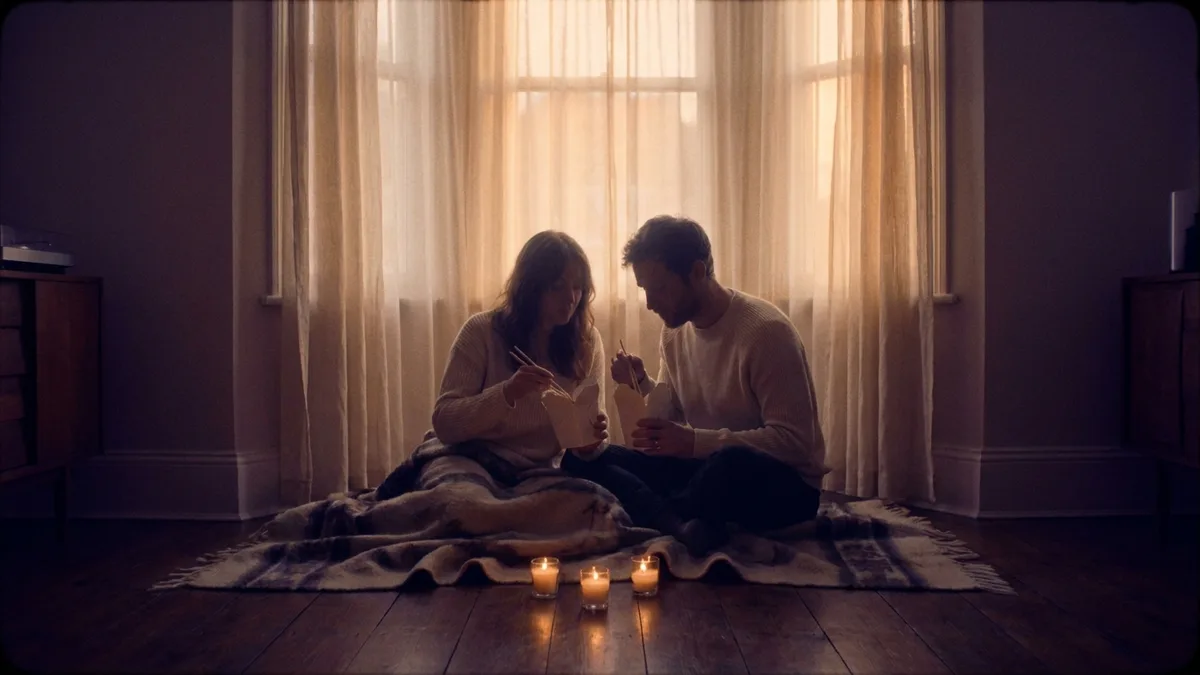
2. Set up a living-room picnic. Blanket on the floor, candles, takeout or homemade food. Sitting on the ground changes the energy more than you would expect.
3. Do a blind taste test. Buy five cheap snacks, chocolates, or wines. Blindfold each other. Rate them. Argue about the rankings.
4. Play a two-player board or card game. Cribbage, Jaipur, Patchwork, or a cooperative game like Pandemic. Competitive or cooperative, either way you are paying attention to each other.
5. Watch a documentary and actually talk about it. Not a series you half-watch while scrolling. Pick one topic, watch it together, then discuss. What surprised you? What did you disagree on?
6. Write letters to each other. Set a timer for 15 minutes. Each of you writes what you appreciate about the other right now. Read them aloud. Keep them.
7. Build a playlist together. Each person picks 10 songs that mean something to them. Play them in order, explain why. You will learn things you did not know.
8. Have a dessert night. Bake one thing from scratch. The process is the date. Eat it warm.
Outdoor date nights that cost almost nothing
Walking side by side tends to open people up more than sitting face to face. Something about forward motion and shared direction makes hard or honest conversations easier.
9. Sunset picnic with food from home. Pack whatever you have. Drive or walk to a spot with a view. The cost is zero and the setting does the work.
10. Explore a neighborhood you have never walked through. Every city has pockets you have driven past and never entered. Walk them. Stop at whatever catches your eye.
11. Go stargazing. Drive 20 minutes from city lights if you can. Bring a blanket. You do not need to know the constellations to enjoy looking up together.
12. Hike a trail you have not done before. Not a workout. A walk in nature at a pace where you can talk. Morning or golden hour light makes it feel like an event.
13. Farmers market morning. Budget $15 between you. Pick ingredients together, then go home and cook with only what you bought.
14. Bike ride with a stop. Ride somewhere with a purpose: a bakery, a park bench, a view. The destination gives it shape.
15. Photo walk. Each person takes 20 photos of what catches their eye. Compare at the end. You will see your neighborhood through each other's perspective.
Free date nights you probably haven't tried
Most cities offer more free events than couples realize. A little searching turns up options every week.
16. Gallery opening or art walk. Many galleries host free openings with refreshments. You get art, conversation starters, and sometimes free wine.
17. Free outdoor concert or movie. Parks departments, libraries, and local venues run these throughout the summer. Check your city's events calendar.
18. Volunteer together. A food bank, animal shelter, or community garden. Working toward something together, side by side, builds a specific kind of closeness that conversation alone sometimes cannot.
19. Library date. Browse separately for 20 minutes. Each person picks a book for the other. Explain why you chose it.
20. Sunrise date. Set an alarm. Watch it from a rooftop, a park, or your backyard with coffee. There is something about starting a day together on purpose that resets the week.
21. People-watch with a story game. Sit at a busy spot. Pick strangers and invent their backstories. Take turns. See who builds the more elaborate fiction.
22. Take a free class. Community centers, hardware stores, and outdoor retailers offer free workshops. Learn something small together. (For more ideas on rebuilding closeness after a rough stretch, see how couples stop the cycle of fighting.)
What actually makes a date night strengthen your relationship
Not every evening out counts as a date night, even if you spent money on it. The National Marriage Project's research identified three ingredients that make date nights measurably beneficial:
Novelty. Doing something new together activates the same brain chemistry as early-stage attraction. You do not need a skydiving trip. A new recipe, a new route, a new conversation topic all count.
Real conversation. Not logistics. Not kid schedules. Actual exchange about how you are feeling, what you are thinking about, what you want. This is where the relationship maintenance happens.
Undistracted presence. Phones away. Screens off. The point is to be with each other in a way you are not during a regular weekday evening.
| Ingredient | Why it matters | Low-cost example |
|---|---|---|
| Novelty | Activates curiosity and engagement | Cook a cuisine you have never tried |
| Real conversation | Builds understanding and intimacy | Each share one thing on your mind this week |
| Undistracted presence | Signals "you are my priority" | Phones in another room for two hours |
When a date night includes all three, the cost barely registers. A $10 picnic with good conversation and no phones will do more for your relationship than a $200 dinner where you both scroll between courses.
How to make date nights a habit without a big budget
The couples who get the most out of date nights are the ones who make them regular, not the ones who make them expensive. Here is what works:
Pick a recurring night. It does not have to be every week. Twice a month is the frequency the research supports. Put it on the calendar.
Alternate who plans. One person picks this week, the other picks next time. It distributes the effort and introduces surprise.
Keep a running list. When you see something interesting, a free event, a new trail, a recipe, add it to a shared note. When date night comes, you already have options.
Protect the time. The biggest threat to date nights is not money. It is letting other things fill the slot. Treat it the way you would a dinner reservation you cannot cancel.
Adoree can be your running list. "Out there" brings real places in your city, "Nights in" picks the film, the dish or the book, and This Week puts the night on a shared calendar so it actually happens. For a night in with zero spend, she picks a couple game for you two: you each answer on your own phone and the answers reveal once you've both played. Built by a team that cares about how couples communicate, it runs $9.99 a month, about the cost of one of these date nights.
Quick-reference: 25 cheap date night ideas by budget
| Budget | Ideas |
|---|---|
| Free | Stargazing, sunset picnic, gallery walk, library date, sunrise coffee, photo walk, people-watch game, volunteer, free concert, neighborhood walk |
| Under $15 | Living-room picnic, blind taste test, board game night, bike ride with a stop, farmers market cook-off |
| Under $25 | Cook a new cuisine, dessert bake night, playlist and letter-writing evening, documentary and discussion, free class + coffee after |
Every one of these is something you can do this week. The research is clear: couples who date regularly are happier, more committed, and communicate better. The price tag has nothing to do with it.
Frequently asked questions
How often should couples have a date night?
Research from the National Marriage Project found that one to two date nights per month is the sweet spot. Couples who date at that frequency report significantly higher happiness, communication quality, and sexual satisfaction than those who rarely date.
Do cheap date nights work as well as expensive ones?
Yes. Studies show that relationship satisfaction is tied to the quality of time spent together, not the cost. Novelty, conversation, and being fully present matter far more than a restaurant bill. A $10 picnic can outperform a $200 dinner.
What is the average cost of a date night in 2026?
According to the BMO Real Financial Progress Index (February 2026), the average American date now costs about $189, up from $168 in 2025. Americans spend roughly $2,323 on dates per year.
What are the best at-home date night ideas on a budget?
Cook a new recipe together, set up a living-room picnic with candles, do a blind taste test, play two-player board games, or watch a documentary and talk about it afterward. The key is making it feel different from a regular evening at home.
What can couples do for free on a date night?
Go stargazing, explore a new neighborhood on foot, attend a free local event like a gallery opening or outdoor concert, have a sunset picnic with food from home, or do a photo walk together. Most cities have free events every week.
Tonight's date, already picked.
Adoree finds real date ideas in your city with "Out there" and picks a film, a dish or a book for "Nights in", then puts it on This Week. Free for 3 days, then $9.99/month.
Plan a date with Adoree →Ask Adoree
Tell me what you two love — I'll plan tonight, out in your city or a perfect night in.
References
- The Date Night Opportunity. Wilcox, B. & Dew, J., National Marriage Project & Wheatley Institute (2023). https://wheatley.byu.edu/date-night-report
- Date-flation Hits Hard: Average Date Spend Nears $200. BMO Real Financial Progress Index (2026). https://usnewsroom.bmo.com/2026-02-11-Date-flation-Hits-Hard-Average-Date-Spend-Nears-200-BMO-Real-Financial-Progress-Index
- Date Your Spouse and Stay Happily Married. Institute for Family Studies (2023). https://ifstudies.org/blog/date-your-spouse-and-stay-happily-married