
Key takeaways
- Asking the question at all shows more self-awareness than most people have.
- No relationship problem is purely one person's fault. Patterns take two people to sustain.
- Gottman's Four Horsemen (criticism, contempt, defensiveness, stonewalling) are the clearest behavioral markers to check yourself against.
- Single-perspective reflection has a hard ceiling: you know your intentions, not how they land.
- Reflection without a next step is just rumination. The goal is finding one pattern you can actually change.
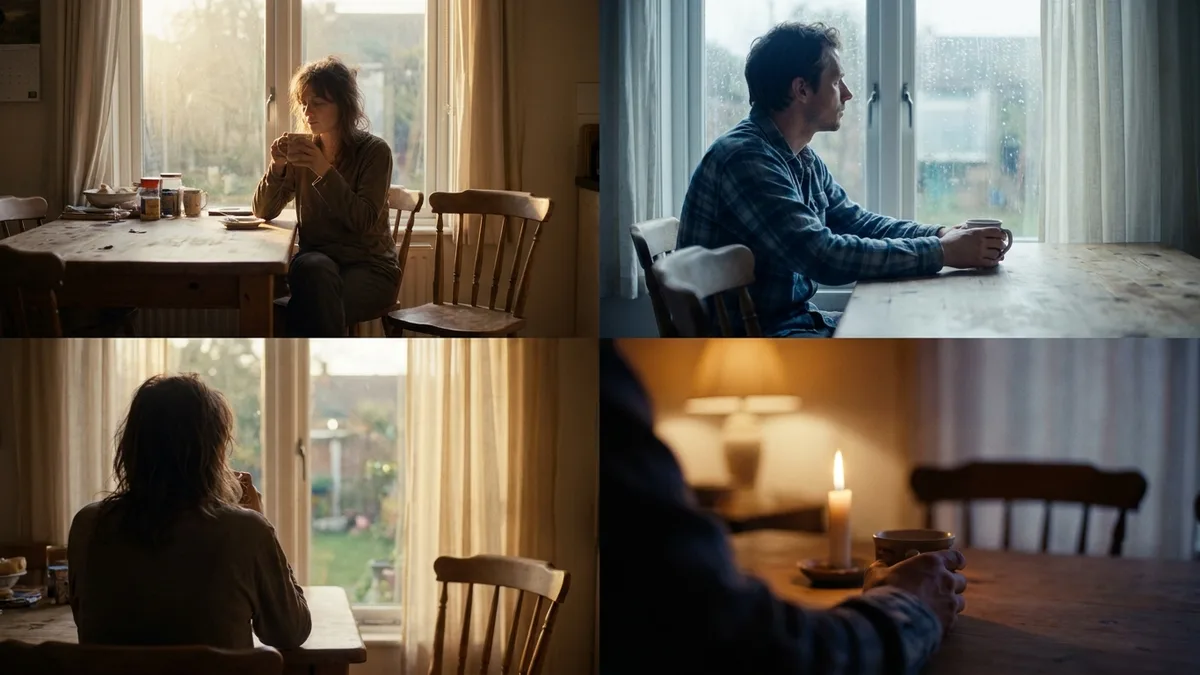
What does "being the problem" actually mean in a relationship?
The phrase "am I the problem in my relationship" sounds like a confession waiting to happen. It is not. It is one of the more useful questions you can bring to a relationship, because it assumes you have a role in what is happening rather than writing it off as something your partner is doing to you.
Most relationship problems are not about one bad person and one innocent one. They are patterns, loops that both people sustain even when one feels like the obvious instigator. Asking whether you might be contributing is harder than it sounds. Research by psychologist Tasha Eurich found that while 95% of people believe they are self-aware, only about 10-15% actually are. The gap between how we see ourselves and how we act in close relationships is real and consistent.
So the goal of any honest self-check is not to decide if you are a good or bad partner. It is to find the specific behaviors that are not working. Gottman's research on couples identified four communication patterns that reliably predict relationship breakdown: criticism (attacking your partner's character rather than a specific behavior), contempt (treating your partner as beneath you), defensiveness (blocking feedback to protect yourself), and stonewalling (shutting down entirely). He called them the Four Horsemen. Most people who ask "am I the problem?" are running one or more of these patterns without fully seeing it.
The honest question is not "am I bad?" It is "which of these patterns do I recognize in myself?"
Take the 10-question self-check
Answer honestly. This is not a quiz designed to reassure you. Each question maps to a specific behavior pattern rooted in Gottman's research and attachment theory.
| Question | What it checks |
|---|---|
| When we argue, do I bring up past issues that have nothing to do with the current conflict? | Stonewalling / contempt carry-over |
| Before hearing my partner fully, do I already feel certain I am right? | Defensiveness |
| When I am upset, do I go quiet rather than say what is actually bothering me? | Stonewalling / passive conflict avoidance |
| Do I say "fine" or "whatever" when I mean the opposite? | Passive-aggressive communication |
| When my partner raises something that hurt them, do I feel defensive before I feel empathy? | Defensiveness |
| Do I criticize who my partner is ("you are selfish") rather than what they did ("that felt dismissive")? | Criticism |
| Do I minimize how much certain things affect my partner? | Contempt / emotional dismissal |
| Do I expect my partner to "just know" what I need, without saying it clearly? | Passive expectation |
| When I apologize, do I add "but you..." before I have finished? | Conditional apology / defensiveness |
| Can I say what I need from this relationship without making it a list of my partner's failures? | Blame-framing |
Three or more yes answers does not make you a bad partner. It means you have specific, named patterns to work with. Most people in relationships longer than a year have developed at least a few.
What your pattern cluster reveals
Your yes answers probably cluster in one of three areas. Each cluster points to something different.
| Pattern cluster | What it usually reflects | A place to start |
|---|---|---|
| Questions 1, 5, 9 (defending before listening) | Defensiveness as a default | Try restating your partner's point accurately before responding |
| Questions 3, 7, 8 (needs stay hidden) | Passive communication style | Finish one sentence that starts with "I feel" and say it out loud |
| Questions 2, 6, 10 (framing as judgment) | Criticism and blame orientation | Swap a character observation for a specific behavior description |
Most people do not fit neatly into one cluster. What matters is spotting which patterns show up most often. The goal is not to diagnose yourself but to find one place where you can shift something concrete.
If your answers are scattered across all three clusters, or if the questions triggered a strong defensive reaction just by reading them, that itself is information.
The blind spot every self-reflection quiz misses
Here is what no solo quiz can give you: your partner's experience of what you just answered.
You know your intentions. You do not know your impact. You might answer "no" to criticizing who your partner is and genuinely believe it, while your partner experiences your tone as cutting every time you disagree. That gap between intention and impact is where most relationship problems actually live.
This is the structural limit of single-perspective reflection. You are using your own perception to evaluate your own perception. The most useful version of this exercise happens when both people do it separately, with no performance pressure, and then compare what they find. Two people looking at the same dynamic from opposite sides produces something much closer to the truth than one person filling out a form alone.
That is the core of what tools like Adoree are built to do. Both partners speak to an AI relationship assistant privately, without the other listening in. Neither person has to manage the other's reaction while being honest. What comes back is a picture of both sides: not a verdict, but a map of where each person actually is. Many couples find they have been arguing about symptoms while both missing the same underlying pattern.
The other question: can both people be "the problem" at once?
Almost always. Gottman's long-term couples research found that roughly 69% of relationship conflicts are perpetual: they recur regardless of how many times the couple discusses them, because they reflect genuine underlying differences in personality, values, or needs. These conflicts do not get solved. They get managed.
The fights that feel completely unsolvable are usually not about the dishes, the in-laws, or the credit card charge. They are about a recurring dynamic underneath: one partner feels controlled and the other feels dismissed; one needs more closeness and the other needs more space. Neither person is the problem. The dynamic is.
Knowing this matters because it reframes the question. Instead of "am I the problem?" the more honest frame becomes: "what role do I play in the pattern we are both stuck in?" It is a question you can actually do something with.
What to do after you have reflected
Reflection without a next step is rumination. Here is where it goes from thinking to changing:
Pick one thing. Not the full list. One specific behavior from the self-check above that you recognize in yourself. Name it clearly in your own mind before you say it to anyone.
Say it simply to your partner. You do not need a dramatic moment. Something plain works: "I have noticed I bring up old things when we fight about something new. I am working on that." One specific observation. No grand gesture required.
Watch for the moment it would happen next. You cannot unlearn a pattern by deciding to stop. You can catch yourself in the second before you default to it, and try something different. That pause, repeated, is where change actually happens.
Bring real input into the picture. If the patterns feel deeply stuck, especially if they have been running for years, working through them with outside perspective speeds things up considerably. The questions therapists actually use in couples sessions are designed to surface what neither person can see from inside the dynamic.
| Method | What it shows you | What it misses |
|---|---|---|
| Solo quiz | Your own behavioral patterns | Your partner's experience of those patterns |
| Honest conversation with your partner | Both reactions in real time | Each person managing the other's feelings while speaking |
| AI relationship assistant (both separately) | Both sides without performance pressure | Clinical depth for complex, long-running histories |
| Couples therapist | Patterns seen from outside by someone trained to spot them | The daily moments between sessions |
For couples who want to start somewhere concrete before committing to regular sessions, Adoree gives both partners a private space to speak honestly about their side of a recurring conflict. See also: how to stop the cycle of fighting in a relationship for what to do when you have already identified the loop, and what resentment looks like before it becomes contempt for couples where the patterns have been building for a while. For more on how Adoree is built, see the about page.
What most couples find, once both people do this kind of honest reflection separately, is that neither person is carrying the full weight of what went wrong. The blame usually splits more evenly than either person expected.
Frequently asked questions
Is it healthy to ask 'am I the problem in my relationship?'
Yes. People who ask this question tend to have more self-awareness than those who don't. Research by psychologist Tasha Eurich found that while 95% of people believe they are self-aware, only about 10-15% actually are. Asking is the right start. The concern is whether the answer leads to change or just more self-criticism.
What are signs I might be contributing to relationship problems?
Common signs include getting defensive before you've fully heard your partner, criticizing who they are rather than what they did, going silent when you're upset instead of naming the feeling, and bringing up past grievances in current arguments. These are patterns, and patterns can be changed.
How accurate are online relationship quizzes?
Online quizzes give you a starting point, not a verdict. Their accuracy depends entirely on your honesty and self-insight. The bigger limit is structural: they only capture your perspective. Your partner's experience of the same interactions will differ in ways you can't predict from inside your own head.
What is the difference between self-blame and self-awareness?
Self-blame says 'I am the problem.' Self-awareness says 'I have a pattern that isn't working.' One is about identity; the other is about behavior. Behaviors change. Stopping at self-blame keeps you stuck. Self-awareness followed by one concrete shift is the goal.
What should I do if I realize I'm contributing to relationship problems?
Pick one specific pattern, not five. Name it plainly to your partner without framing it as a big confession. Then watch for the next moment you'd default to that pattern and try something different. Small consistent changes build trust faster than large announcements. If the patterns feel deeply stuck, structured support can help you see what you can't from inside them.
Meet Adoree.
Adoree is an AI relationship assistant built for couples. It hears both partners privately, remembers everything, and helps you actually move forward. Free for 3 days.
Try Adoree free →Your version of this
You just read about the pattern. Tell me yours — I’ll tell you which one you’re in.
Three messages, free, no sign-up. Nothing is saved unless you keep it.
References
- The Four Horsemen: Recognizing Criticism, Contempt, Defensiveness, and Stonewalling. The Gottman Institute. https://www.gottman.com/blog/the-four-horsemen-recognizing-criticism-contempt-defensiveness-and-stonewalling/
- What Self-Awareness Really Is (and How to Cultivate It). Tasha Eurich, Harvard Business Review (2018). https://hbr.org/2018/01/what-self-awareness-really-is-and-how-to-cultivate-it
- Making Marriage Work. John Gottman, Ph.D., The Gottman Institute. https://www.gottman.com/about/research/