
Key takeaways
- 25% of cohabiting couples say sleep deprivation regularly stops them having sex
- One week of five-hour nights drops testosterone by 10 to 15 percent, the equivalent of 10 years of aging
- Tired and avoidant feel the same from the inside but need opposite responses
- Non-sexual touch and a ten-minute earlier bedtime rebuild closeness without pressure
- Unequal mental load is often the hidden engine of chronic relationship exhaustion
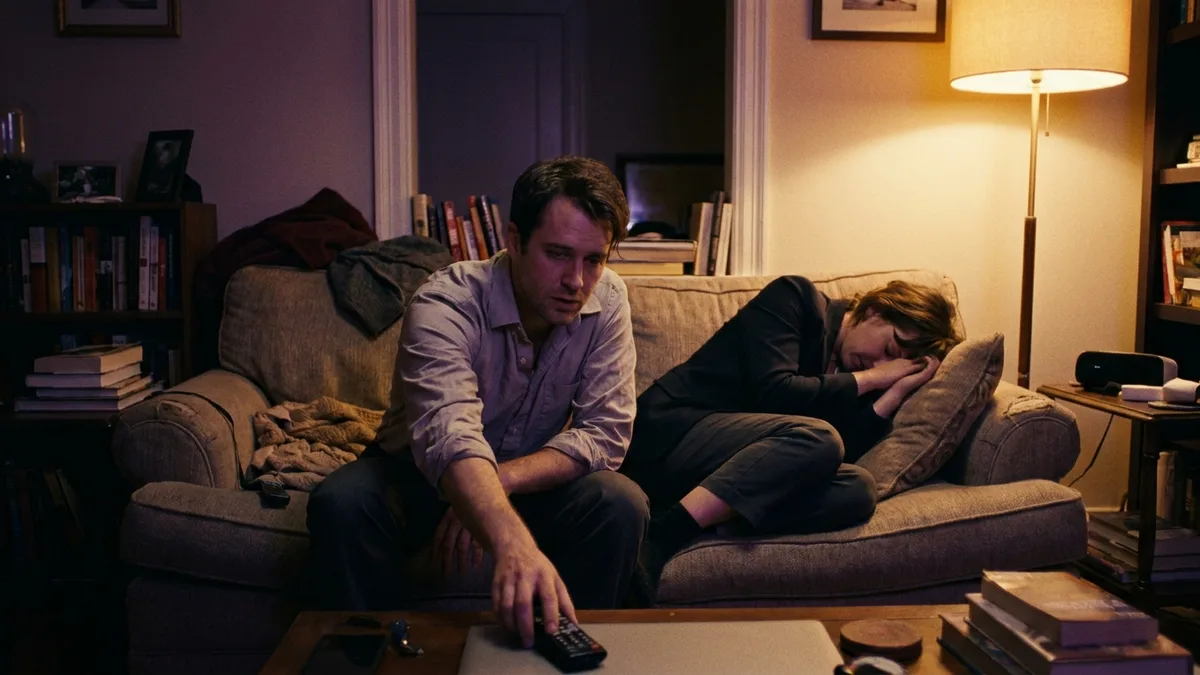
Is Being Too Tired for Intimacy Normal?
Yes, and it is more common than most couples admit. According to the National Sleep Foundation, one in four cohabiting Americans say they are so sleep-deprived they are often too tired for sex. Women report it at higher rates than men. This is not a character flaw or a sign that something is broken between you. It is what happens when two exhausted people try to be partners at the end of a very long day.
The problem is what happens next. When tiredness becomes the default answer every night, it stops being just about sleep.
What Does Exhaustion Actually Do to Desire?
Physical tiredness has a direct, measurable effect on the hormones that drive sexual desire. A University of Chicago study found that one week of restricting sleep to five hours per night dropped testosterone levels in young men by 10 to 15 percent. That is the hormonal equivalent of aging 10 to 15 years in seven days.
For women, the relationship runs in the other direction with equal clarity. Research published in the Journal of Sexual Medicine found that each additional hour of sleep increased the likelihood of sexual activity the following day by 14 percent.
Sleep deprivation also elevates cortisol, the stress hormone, which competes directly with sex hormones and suppresses libido across genders. According to the CDC's National Health Interview Survey, roughly one in six U.S. adults experiences frequent fatigue, defined as feeling "very tired or exhausted most days or every day." That number rises significantly for women and parents of young children.
| Sleep deprivation effect | Impact on intimacy |
|---|---|
| Testosterone drops 10-15% after one week of five-hour nights | Lower desire, reduced initiation |
| Elevated cortisol suppresses sex hormones | Decreased arousal across genders |
| Each extra hour of sleep increases female desire by up to 14% | More receptivity after adequate rest |
| Mood and vigor decline daily with restricted sleep | Less emotional availability for connection |
So if you are genuinely too tired for intimacy, biology is doing a lot of the work. That matters, because it means the answer is not willpower.
Tired vs. Avoidant: How to Tell the Difference
This is the question that matters most, and it is also the one most people avoid asking. Genuine exhaustion and emotional avoidance feel identical at 9:30pm. Both produce the same "not tonight." They need opposite responses.
Here is the test: does rest move the needle?
If a weekend away, or even just a run of decent sleep, leaves you feeling closer and more open to your partner, tiredness is the primary driver. If rest does not shift anything, and if there is a low-level reluctance or dread when intimacy is suggested, something relational is more likely underneath it.
A few honest questions to ask yourself:
- When did we last have a night where connection felt natural? What was different about it?
- Do I feel relieved when it does not happen, or just exhausted?
- Is the tiredness specific to intimacy, or am I this depleted about most things?
The quiz "The 9:30 problem" was built around exactly this distinction. It takes about a minute and gives you a pattern, not a score, and one specific thing to try in the hour you actually have.
The Hidden Driver: Mental Load
The top-ranking articles on this topic cover hormones and sleep. Almost none of them name the thing that is often running the whole show: unequal mental load.
Mental load is not just chores. It is the noticing, planning, coordinating, and remembering that keeps a household running. Who tracks the appointments? Who notices when you are running low on something? Who holds the social calendar in their head? In many households, this work falls overwhelmingly on one partner, often without either person fully registering it.
Research from Modern Husbands and a longitudinal study in the Journal of Social Science Studies found that equal division of cognitive household labor was linked to the highest relationship satisfaction for both partners. Unequal division did the opposite: the partner carrying more reported lower sexual desire, more resentment, and less availability for connection.
When you are mentally managing everything, there is nothing left over by 9:30. The exhaustion is real, but its source is the relationship structure, not the hour.
| What the mental load looks like | Who feels it most |
|---|---|
| Tracking appointments, social obligations, school events | Usually the partner with more domestic responsibility |
| Noticing what needs restocking, repairing, booking | Same partner, invisibly |
| Holding the emotional temperature of the household | Disproportionately falls to one person |
| Planning meals, childcare logistics, family schedules | Whoever is the default "household CEO" |
The conversation worth having is not "why are you always tired." It is "what are we each actually carrying, and is it split in a way we both agreed to?"
What Actually Helps When You Are Too Tired for Intimacy
The most common advice is to schedule sex. Most couples find this feels transactional and adds pressure without adding connection. Here is what tends to work better.
Shift the window. Intimacy does not have to happen at 11pm after both of you have nothing left. A ten-minute earlier bedtime, or connection at 7pm before the evening fully unravels, changes the math entirely. If "always too tired at night" is accurate, the answer is to stop trying at night.
Start smaller than you think you need to. Nonsexual touch, holding hands while watching something, sitting close enough to feel each other's warmth, a longer hug before someone leaves for work, rebuilds the physical ease that makes intimacy feel like a natural continuation rather than a performance. This is not a consolation prize. It is how closeness actually returns.
Have the mental load conversation first. If one partner is running the household alone, desire is not the primary problem. A direct, non-accusatory conversation about what each person is noticing, planning, and tracking every week is more useful than any intimacy technique.
Protect one window a week. Not for sex specifically, just for each other. How you reconnect after a long stretch of parallel living matters more than what you do in the moment. Ten undivided minutes beats one long date a month.
| Approach | Why it works | Time investment |
|---|---|---|
| Shift the time window | Works with biology, not against it | Zero extra time |
| Nonsexual touch first | Rebuilds comfort without pressure | Under a minute daily |
| Mental load conversation | Addresses the real source of depletion | One honest hour |
| Protected couple time | Restores the habit of turning toward each other | 10 minutes a week |
When "Too Tired" Has Been Going On for Months
A stretch of low desire from exhaustion is normal. When it extends for months and neither partner feels it is changing, it is worth looking at the full picture.
Has something shifted in your lives that increased the load on one or both of you? A new job, a child, a health issue, a family situation? Low desire that persists after genuine effort to address sleep and mental load sometimes signals something more, including depression, hormonal changes, or relationship disconnection that has gone unnamed for too long.
Tools like Adoree give both partners a private space to say what they have been carrying, then help you understand where the other person is. It is available without a waiting room or a $200 hourly session, at any hour including the ones when nobody wants to bring this up in person.
Reading both partners' separate accounts of the same week, Adoree helps you see whether this is a structural problem (two exhausted people who need to redistribute the load) or something relational that needs a more direct conversation. Learn more on the about page.
The pattern of being too tired for intimacy almost never resolves itself. But it usually has a specific shape, and knowing the shape is most of the work.
Frequently asked questions
Is it normal to be too tired for sex in a relationship?
Yes. The National Sleep Foundation found that one in four cohabiting Americans say they are regularly too sleep-deprived for sex. Work, parenting, and the mental load of running a household deplete desire before evening even arrives. Occasional tiredness is entirely normal.
How do I tell the difference between being tired and avoiding intimacy?
Genuine tiredness lifts after real rest. If you feel closer and more open after a good night's sleep or a weekend away, exhaustion is the main culprit. If rest does not move the needle and you feel a low-level dread when intimacy is suggested, something relational is more likely underneath it.
Can lack of sleep really lower sex drive?
Yes, substantially. A University of Chicago study found that one week of restricting sleep to five hours per night dropped testosterone in young men by 10 to 15 percent, the equivalent of 10 to 15 years of normal aging. For women, each extra hour of sleep increases sexual desire by up to 14 percent, per research in the Journal of Sexual Medicine.
What can couples do when they are always too tired for intimacy?
Shift the window: intimacy does not have to happen at the end of the day. Move a ten-minute connection earlier, reduce the mental load through a direct conversation about what each person is carrying, and start with nonsexual touch to rebuild closeness without pressure.
Does unequal chore division affect sexual desire?
Research consistently links unequal mental load to lower relationship satisfaction and sexual desire. The noticing, planning, and coordinating that goes into running a household is tiring work, and when it falls mostly on one partner, resentment accumulates quietly and desire drops with it.
Meet Adoree.
Adoree is an AI relationship assistant built for couples. It hears both partners privately, remembers everything, and helps you actually move forward. Free for 3 days.
Try Adoree free →Your version of this
You just read about the pattern. Tell me yours — I’ll tell you which one you’re in.
Three messages, free, no sign-up. Nothing is saved unless you keep it.
References
- Sleep in America Poll: Sleep and the American Family. National Sleep Foundation. https://www.sleepfoundation.org/physical-health/sex-sleep
- Sleep Loss Lowers Testosterone in Healthy Young Men. UChicago Medicine (2011). https://www.uchicagomedicine.org/forefront/news/sleep-loss-lowers-testosterone-in-healthy-young-men
- The Sex Recession: The Share of Americans Having Regular Sex Keeps Dropping. Institute for Family Studies (2024). https://ifstudies.org/blog/the-sex-recession-the-share-of-americans-having-regular-sex-keeps-dropping
- Tiredness/fatigue and sexuality in everyday life. PMC / National Library of Medicine. https://pmc.ncbi.nlm.nih.gov/articles/PMC12535510/
- Mental Load and Household Inequality: What Couples Need to Know. Modern Husbands. https://www.modernhusbands.com/post/mental-load-and-household-inequality-what-couples-need-to-know
- QuickStats: Fatigue in U.S. Adults, 2022. CDC / NCBI. https://www.ncbi.nlm.nih.gov/pmc/articles/PMC10651319/