Home · Couples therapy and counseling
Relationship Counselling in the UK: Relate, the NHS and Private Counsellors

adoree Ask me in one tap
Key takeaways
- Relate charges by household income in England and Wales: £65 a session under £30,000, rising in steps to £145 above £110,001.
- Relate couples start with a two-part initial assessment: one joint session, then a 50-minute session split into two 25-minute individual slots.
- The NHS only offers counselling for certain mental health conditions. If one of you has depression, NHS Talking Therapies lists couple therapy among its options, and you can refer yourself.
- Anyone can call themselves a counsellor, so check a private counsellor is on a professional register such as BACP's.
- Relate says six to twelve sessions is usual. What you do in the days between them decides a lot of the outcome.
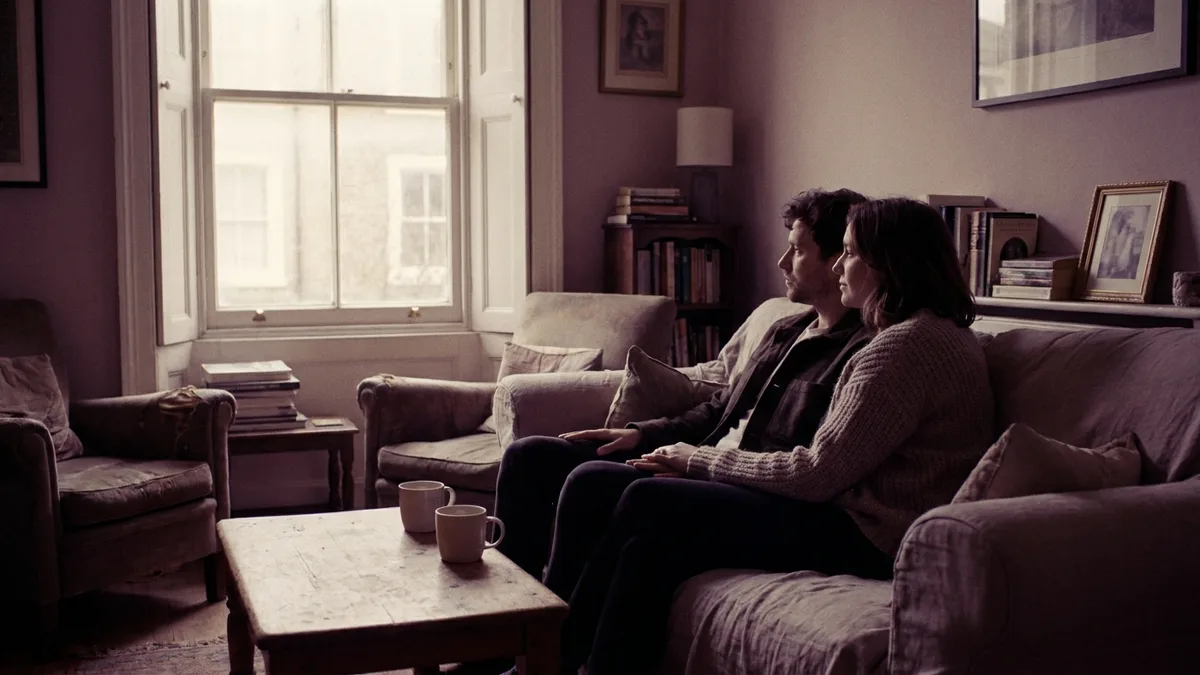
Most couples who search for relationship counselling have already had the same argument more times than they can count. You love each other. You just can't seem to talk about the thing without it going sideways.
Here is how relationship counselling actually works in the UK right now: who offers it, what it costs today, what the NHS will and won't do, and what to do between sessions so the hour you pay for goes further. Every price below comes from the provider's own website, checked in November 2026.
What are your options for relationship counselling in the UK?
You have four main routes. Relate, the largest charity for this, charges by household income. Other charities include Marriage Care, Relationships Scotland and Relate NI. Private counsellors set their own fees and are found through the BACP and UKCP directories. The NHS only helps couples in a narrow case: when one partner has depression.
| Route | Who it suits | Cost | How to start |
|---|---|---|---|
| Relate (England and Wales) | Most couples, any relationship type | £65 to £145 a session, by income | Book online or call 0300 100 1234 |
| NHS Talking Therapies (England) | Couples where one partner has depression | Free | Refer yourself, no GP visit needed |
| Private counsellor (BACP or UKCP) | Couples who want a specific approach or schedule | Set by each counsellor | Search the directory by postcode |
| Other charities (Marriage Care, Relationships Scotland, Relate NI) | Couples who want a charity near them | Varies, ask when you call | Contact the charity directly |
Couples counselling, marriage counselling and relationship counselling are the same work under three names. You do not need to be married. Relate says it sees people who are single, married, living together, LGBTQIA+ or non-monogamous.
How does Relate counselling work, and what does it cost?
Relate counselling starts with an initial assessment, then usually runs six to twelve sessions. In England and Wales, fees are set by household income, from £65 a session for households under £30,000 to £145 above £110,001. Booking is online for the first assessment, or by phone on 0300 100 1234 (0300 003 2340 in Wales).
These are Relate's fees as listed on its FAQ page today. Some older pages still quote £55 as the lowest fee. Relate's own page lists £65 today.
| Household income | Relate fee per session |
|---|---|
| Under £30,000 | £65 |
| £30,001 to £40,000 | £75 |
| £40,001 to £55,000 | £85 |
| £55,001 to £70,000 | £95 |
| £70,001 to £90,000 | £110 |
| £90,001 to £110,000 | £125 |
| Above £110,001 | £145 |
A few things worth knowing before you book:
- Most sessions are remote. Relate's face-to-face appointments are currently offered in Bedford and Brighton only, so for most couples Relate means a video or phone session.
- There are shorter options. One session therapy costs £75 for 50 minutes and suits couples with one specific issue, such as disagreements over parenting or the in-laws. Chat with a counsellor costs £45 for 25 minutes, but it is for one person only.
- Some people get it free. Relate offers up to six funded sessions to people who work, or have worked, in sectors covered by partners such as the Bank Workers Charity, Grocery Aid, the Licensed Trade Charity, the Charity for Civil Servants and the armed forces charities.
- Cancellations need 48 hours' notice, or the session is not refunded.
Relate is honest that counselling is not a magic fix. Its own page says some couples come out stronger, and others realise that separating is the better path. Both count as an outcome.
Can you get couples counselling on the NHS?
Usually not for relationship problems on their own. The NHS says it only offers counselling for certain mental health conditions, such as depression. The exception: if one partner is depressed, NHS Talking Therapies in England lists couple therapy for depression among its treatment options, and you can refer yourself.
NHS England names couple therapy for depression (CTfD) or behavioural couple therapy (BCT) as one of the NICE-recommended options for depression. The NHS also says the type of therapy you can get depends on what you need and what is available in your area, so ask your local service directly whether it offers couple work.
To refer yourself, you need to be registered with a GP and aged 18 or over (16 in some areas). You can find your local service on the NHS website. You do not need a diagnosis first.
The NHS also says you may be able to get free counselling through your employer, school or university, or from a charity, so it is worth asking HR.
How do you find a private couples counsellor near you?
Search the BACP Therapist Directory or the UKCP register by postcode, then filter for couples or relationship work. Check that whoever you choose is registered, because in the UK anyone can call themselves a counsellor. Fees are set by each counsellor, so ask before the first session.
The two directories:
- BACP Therapist Directory. BACP says its directory lists over 18,000 private therapists, and only registered or accredited members can advertise on it.
- UKCP Find a Therapist. The UKCP search has filters for couples and relationships. When we checked, the register was down for maintenance and UKCP was confirming registrations by email instead.
On cost, BACP says more than half of the listings on its directory advertise between £40 and £60 a session, and many offer a free introductory session or lower rates for people on low incomes. That figure covers all therapists, not only couples specialists, so treat it as a floor. At Tavistock Relationships, a London charity that specialises in couples, qualified therapists charge £100 to £200 a session depending on experience, with lower-cost sessions available from supervised trainees.
BACP also recommends agreeing fees, cancellation terms and how you pay in a written contract before you start.
What happens in the first relationship counselling session?
The first session is mostly about fit. The counsellor asks what brought you in, hears from each of you, and checks whether they are the right help. At Relate, couples have a joint session first, then a 50-minute session split into two 25-minute individual slots, one each.
That individual slot is mandatory at Relate. It gives each of you room to say what you might not say with your partner sitting there. Relate's assessment page also explains how it handles domestic abuse: where abuse is entrenched or puts a partner or children at risk, a specialist service is the better route, and it will point you to one.
Expect the counsellor to listen far more than they advise. The NHS describes counsellors as people who listen without judgement, try to see things from your point of view, and help you find your own solutions. They do not usually tell you what to do.
If you want a fuller walk-through of what the hour feels like, our guide to what to expect in your first couples therapy session goes step by step.
If you are frightened of your partner, you can call the National Domestic Abuse Helpline, run by Refuge, free and in confidence, 24 hours a day on 0808 2000 247.
How do you choose the right relationship counsellor?
Pick someone you can both talk to honestly, who works with couples regularly and is on a recognised register. Ask three questions on the first call: how much of their work is with couples, what they do when one partner wants out and the other doesn't, and whether they ever see each of you alone.
| Question to ask | Why it matters |
|---|---|
| How much of your work is with couples? | Couples work is its own skill. You want someone who does it every week. |
| Which approach do you use? | Some counsellors focus on conflict patterns, others on the emotional bond underneath. Neither is wrong, but you should know. |
| Do you ever see us separately? | Relate always does. Some private counsellors never do. Know which you are signing up for. |
| What are your fees and cancellation terms? | BACP advises agreeing these in writing before you start. |
| Are you on a register? | Anyone can use the title counsellor. A register means standards and a complaints route. |
One more test: after the first session, ask each other privately whether you both felt heard. If one of you felt ganged up on, say so to the counsellor. A good one will take it seriously.
What should you do between counselling sessions?
Much of the change happens in the days between sessions. Try the thing you agreed on. Notice when the old pattern starts. Write down what set it off, so you bring the real moment back to the next session instead of a vague summary.
Three habits that help:
- Keep a short note of flashpoints. A line or two each time: what happened, what you felt, what you did next. Counsellors work far better with a fresh example than a general complaint.
- Do the homework, even badly. If you were asked to try a ten-minute check-in, do a clumsy one. A half-done attempt gives you something real to talk about next time.
- Don't relitigate the session in the car. Give it a few hours. The hardest things said in the room usually land better after a gap.
This is where many couples get stuck. The fight happens on a Tuesday night, the next session is ten days away, and there is nobody to talk it through with at 11pm. That gap is what Adoree is built for. Adoree is an AI relationship assistant each of you talks to privately, by voice or text, at any hour. Each of you has your own private space, and your partner can't read your conversations without your consent. Adoree remembers what you have been working on, helps you find words for what you feel before you say it, and keeps the thread going between appointments, so you walk into the next session with the actual moment in hand.
It works alongside counselling. A counsellor brings training and a room. Adoree is there for the other 167 hours of the week. If you are in the UK, Adoree for the UK has British examples and UK support lines built in.
For more on costs, approaches and alternatives, see our hub on couples therapy and counselling.
Frequently asked questions
How much does Relate counselling cost?
In England and Wales, Relate sets fees by household income. A session costs £65 if your household earns under £30,000, rising through £75, £85, £95, £110 and £125 to £145 for households above £110,001. Relate also offers up to six free sessions to people who work, or have worked, in sectors covered by its charity partners.
Can you get couples counselling on the NHS?
Not for relationship problems on their own. The NHS says it only offers counselling for certain mental health conditions, such as depression. If one of you is depressed, NHS Talking Therapies lists couple therapy for depression among its treatment options. You can refer yourself without seeing a GP if you are 18 or over and registered with a GP.
How many sessions of relationship counselling do couples need?
Relate says anything between six and twelve sessions is usual, depending on what you want to work on. The NHS says that people who get counselling through it usually have between 8 and 16 sessions. Some couples only need a single focused session, which Relate offers as One session therapy.
Do we both have to go to relationship counselling?
No. Relate, Relationships Scotland and many private counsellors see one partner on their own, and Relate says you do not need to be in a relationship at all to come. If you go as a couple to Relate, part of the initial assessment is a short individual session for each of you.
How do I find relationship counselling near me?
Start with Relate (0300 100 1234 in England), Relationships Scotland, Relate NI or Marriage Care. For a private counsellor, search the BACP Therapist Directory or the UKCP register by postcode and filter for couples work. Many counsellors also work online, which widens the choice.
Is couples counselling the same as marriage counselling?
In practice, yes. Couples counselling, marriage counselling and relationship counselling describe the same work, usually with the same counsellors, and you do not need to be married to go. Relate, for example, sees couples who are married, living together, LGBTQIA+ or non-monogamous.
Say it out loud before the session.
Adoree is an AI relationship assistant each of you talks to privately, by voice or text, any hour. Get the thing you can't quite say into words, then take it into the room.
Talk to Adoree →Ask Adoree
Not sure you need therapy yet? Tell me what's going on — I'll tell you what you're dealing with tonight.
More on this: Couples therapy and counseling, every guide in one place →
References
- FAQs: How much do we charge?. Relate (accessed November 2026). https://www.relate.org.uk/about-us/relate-faqs
- Relationship counselling. Relate (accessed November 2026). https://www.relate.org.uk/what-we-do/counselling/relationship-counselling
- Initial assessments. Relate (accessed November 2026). https://www.relate.org.uk/what-we-do/counselling/initial-assessments
- Counselling. NHS (accessed November 2026). https://www.nhs.uk/tests-and-treatments/counselling/
- NHS Talking Therapies for anxiety and depression. NHS England (accessed November 2026). https://www.england.nhs.uk/mental-health/adults/nhs-talking-therapies/
- Fees: a blog on contracting and costs. BACP (2025). https://www.bacp.co.uk/news/news-from-bacp/blogs/2025/blogs-and-vlogs/21-october-fees