
adoree Ask me in one tap
Key takeaways
- Emotional intimacy is built through two things: sharing what's real and feeling genuinely received. Miss either one and the closeness doesn't hold.
- Emotional and physical intimacy are related but distinct. You can have one without the other. Emotional intimacy is the more durable anchor.
- In long-term relationships, emotional intimacy often fades through drift rather than damage. It doesn't take a crisis to lose it, and you don't need one to rebuild it.
- The most common barrier is a mismatch in how much emotional sharing each partner is comfortable with. Naming the gap is usually the first useful step.
- Partner responsiveness matters as much as self-disclosure. It's not enough to share more. Your partner needs to respond in a way that makes sharing feel worth it.
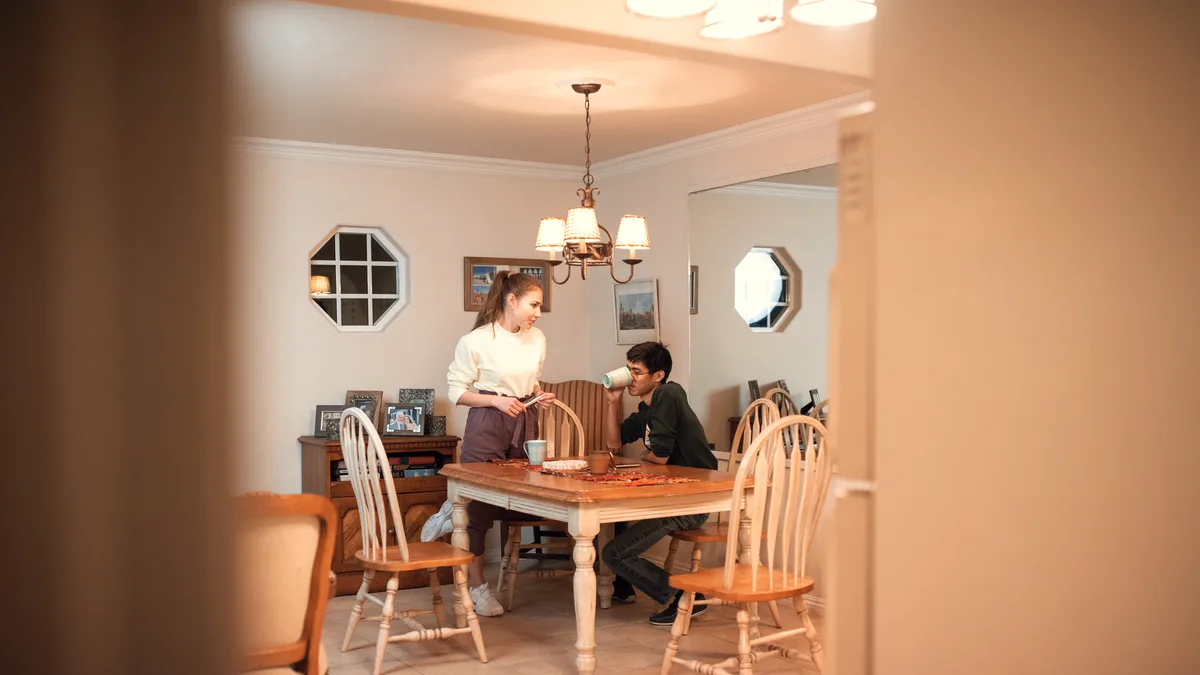
Emotional intimacy is one of those things that's easy to notice when it's missing and surprisingly hard to define when you have it. You just know when you're in a conversation where someone is really there, really receiving you, not waiting for their turn, not calculating how to respond. And you know when that's gone.
The clinical definition and the lived experience point to the same thing: the feeling of being truly known.
What is emotional intimacy?
Emotional intimacy is the experience of feeling genuinely known, understood, and accepted by your partner, including the parts you'd hesitate to show most people. Research by psychologist Jean-Philippe Laurenceau describes it as a process built through two key exchanges: emotional self-disclosure (sharing what's actually going on inside you) and perceived partner responsiveness (feeling that your partner received it with care and understanding). Both have to be present. Sharing without feeling received produces exposure, not closeness.
Why do humans crave intimacy and emotional closeness?
We crave emotional closeness because we are wired for it. Attachment research, developed by John Bowlby and extended by decades of work since, establishes that the need for a close bond with a reliable, responsive person begins in infancy and doesn't go away in adulthood. It shifts. The person we look to changes. But the underlying need to be known and to matter to someone remains a constant throughout life.
This is why loneliness is possible inside a committed relationship. Sharing a home, a bed, and a life with someone doesn't automatically produce emotional intimacy. It requires the specific kind of exchange where each person is both disclosing something real and feeling genuinely received. When that stops, couples describe feeling like strangers living together, even when nothing overtly "wrong" has happened.
Emotional intimacy vs. physical intimacy
Emotional and physical intimacy are related but not the same, and understanding how they differ matters practically.
| Emotional intimacy | Physical intimacy | |
|---|---|---|
| What it involves | Being known at the level of inner experience | Bodily closeness, affection, sexual connection |
| Built through | Self-disclosure and partner responsiveness | Physical presence, touch, shared sensation |
| Can exist without the other | Yes, in close friendships and long-distance relationships | Yes, in relationships where emotional distance has grown |
| Impact when lost | Loneliness, disconnection, feeling unseen | Reduced affection and tension about physical rejection |
| Which tends to be more durable | Emotional intimacy sustains the relationship longer term | Physical intimacy often depends on emotional closeness to thrive |
The pattern that shows up most in longer relationships is that physical intimacy fades when emotional intimacy fades first. The two aren't the same, but they are connected. Couples who address the emotional distance tend to find the physical naturally follows. Couples who try to fix the physical without addressing the emotional rarely find it sticks.
Signs of emotional intimacy (and when it's missing)
Emotional intimacy shows up in texture, not in grand moments. It's what's present in the small exchanges.
| Signs of high emotional intimacy | Signs of low emotional intimacy |
|---|---|
| You can say "I'm scared about this" and expect a response without judgment | You edit yourself before you speak, anticipating dismissal |
| Silence between you is easy, not loaded | Most conversations stay at the surface (logistics, plans, tasks) |
| Your partner knows what actually worries you, not just what you're upset about | Your partner seems surprised by what matters to you |
| You can disagree without it feeling like a threat to the relationship | Disagreement tends to escalate quickly |
| You feel like your partner is on your side even when they don't agree | You feel alone even when you're together |
One of the most useful questions to ask yourself is: When something bothers me, is my partner my first call or my last one? The answer usually tells you something honest about where the closeness actually is.
Why emotional intimacy fades in long relationships
This is the gap that most articles on emotional intimacy miss: it doesn't require a crisis to fade.
In early relationships, the novelty itself generates the conditions for emotional intimacy. Everything is new, so there's always something to share and discover. Over time, familiarity replaces discovery, and without deliberate investment, the conversations that build closeness get replaced by the conversations that run the household.
Research on the interpersonal process model of intimacy, from Laurenceau and colleagues' daily-diary study of married couples, found that self-disclosure of emotion, specifically the sharing of feelings rather than facts or events, was the strongest predictor of intimacy on any given day. What couples tend to lose over time is not the capacity for that kind of sharing, but the habit of it.
Emotional intimacy in marriage specifically also faces a pressure that dating doesn't: the daily workload. Logistics, finances, parenting, coordinating two adult lives leaves less space for the conversations that build closeness. Neither partner is usually failing the other. The intimacy erodes through drift.
How to build emotional intimacy in a relationship
Building emotional intimacy is less about grand conversations and more about shifting the texture of the small ones.
| Practice | What it actually does |
|---|---|
| Share feelings about an event, not just the event itself | "That meeting stressed me out because I felt like my judgment was being questioned" is more intimate than "I had a rough meeting." |
| Respond to what matters, not just what was said | If your partner says they're anxious about something, ask what specifically worries them before you offer a solution |
| Make space for the full version | "Tell me more about that" creates the conditions for emotional disclosure in a way that moving on doesn't |
| Notice when your partner is trying to connect and respond | Small bids for connection (a touch, "you won't believe this...") are the building blocks. Missing them repeatedly erodes intimacy gradually |
| Acknowledge before you fix | Most people need to feel heard before advice lands. "That sounds genuinely hard" before "here's what I'd do" matters more than it seems |
The underlying principle in Laurenceau's research is partner responsiveness: the perception that your partner understands you, values you, and cares about your wellbeing. That perception doesn't come from your partner understanding everything. It comes from how they respond when you share something real. Responding with curiosity, care, and without immediate judgment builds it. Responding with dismissal, minimizing, or turning it into a problem to solve quickly chips it away.
Emotional intimacy in marriage: the specific challenges
Long-term partnership, especially marriage, creates conditions that require deliberate attention to emotional intimacy. The relationship becomes structural. It runs the household, manages money, parents children. All of that is real and necessary. It's also not the same as knowing someone.
Couples who sustain emotional intimacy in long relationships tend to do a few things consistently:
- They make time for conversations that have no agenda. Not check-ins about logistics, but conversations where someone actually asks how the other is doing and waits for a real answer.
- They maintain curiosity about each other. After years together, it's easy to assume you know what your partner thinks and feels. The assumption is often wrong. The couples who stay close keep asking.
- They repair quickly after conflict. The damage to emotional intimacy from an unrepaired argument compounds. Saying "I think we got sideways and I'd rather not leave it like that" preserves the foundation.
For more on what happens when emotional distance has already built up, how to reconnect with your partner covers the specific steps for rebuilding closeness after drift.
When one partner wants more emotional intimacy than the other
This mismatch is more common than it's usually admitted, and it creates its own cycle.
Partner A wants more emotional sharing. Partner B finds the conversations uncomfortable and pulls back. Partner A perceives the pulling back as rejection and either pushes harder (escalating) or stops trying (withdrawing). Partner B experiences pressure in the first scenario and relief in the second. Neither lands them closer.
The way out of this cycle is naming the gap directly, not by criticizing the other person's style, but by saying something honest about your own need: "I feel most connected to you when we talk about what's actually going on for each of us. I miss that." That's very different from "you never talk to me."
Both approaches to emotional sharing are learned, usually from early experience. Someone who grew up in a home where feelings weren't discussed doesn't lack the capacity. They lack the habit and sometimes the safety.
When an outside view helps
Some of the most important emotional intimacy conversations are the ones that keep getting sidetracked. One person feels criticized. The other gets defensive. The same conversation has the same ending.
Adoree is an AI relationship assistant that lets each partner share what's actually going on privately, then helps both people understand what the other is experiencing without the conversation turning into an argument before it gets anywhere. Because each person speaks separately, the full version of what each is feeling gets heard before the two of you try to work through it together.
You can explore more about communication patterns and what different levels of support look like at the relationship answers hub, or read more about how Adoree works.
If no emotional intimacy has been missing from your relationship for a while, that post covers what tends to happen and what usually starts to shift things.
Frequently asked questions
What is emotional intimacy in a relationship?
Emotional intimacy is the experience of feeling truly known, understood, and accepted by your partner. Research by Laurenceau and colleagues describes it as a process built through emotional self-disclosure and perceived partner responsiveness: you share something real, your partner receives it with care, and over many exchanges that becomes closeness.
Can a relationship survive without emotional intimacy?
It can continue, but it typically shifts into what couples describe as feeling like roommates. Without emotional closeness, conflict tends to increase, physical intimacy often diminishes, and both partners report lower satisfaction over time. The relationship doesn't necessarily end, but it becomes harder to sustain.
Why do humans crave intimacy and emotional closeness?
Attachment research suggests humans are wired for close bonds from birth, and those needs don't go away in adulthood. Emotional closeness in a relationship satisfies the fundamental need to be known and to matter to someone. When that need goes unmet over time, loneliness and disconnection tend to follow even inside a committed partnership.
What are the signs of emotional intimacy in a relationship?
Key signs include feeling comfortable sharing things you'd hesitate to tell anyone else, knowing your partner will respond without judgment, feeling understood rather than just heard, being able to sit in silence without discomfort, and sensing that your partner genuinely knows what matters to you and why.
Why is emotional intimacy hard to build?
Because it requires vulnerability, and vulnerability carries real risk. Sharing what's actually going on requires trusting that your partner will respond with care rather than judgment, dismissal, or use that information against you in a future conflict. For anyone with a history of that going badly, the wall that developed was protective.
Ask Adoree
Feeling far apart in bed? Tell me — privately — and I'll tell you what's really going on.
References
- Intimacy as an Interpersonal Process: The Importance of Self-Disclosure, Partner Disclosure, and Perceived Partner Responsiveness. Laurenceau, J.-P., Barrett, L. F., & Pietromonaco, P. R. (1998). Journal of Personality and Social Psychology, 74(5), 1238–1251.. https://www.affective-science.org/pubs/1998/LaurenFBPl1998.pdf
- The Interpersonal Process Model of Intimacy in Marriage: A Daily-Diary and Multilevel Modeling Approach. Laurenceau, J.-P., Barrett, L. F., & Rovine, M. J. (2005). Journal of Family Psychology, 19(2), 314–323.. https://affective-science.org/pubs/2005/Laurenceauetal2005.pdf
- Couple Communication, Emotional and Sexual Intimacy, and Relationship Satisfaction. Schoenfeld, E. A. et al. (2012). Journal of Social and Personal Relationships.. https://www.researchgate.net/publication/257645786_Couple_Communication_Emotional_and_Sexual_Intimacy_and_Relationship_Satisfaction