
adoree Ask me in one tap
Key takeaways
- Dowry means property or valuables given in connection with a marriage. Freely given, customary gifts that are listed are treated differently from anything demanded.
- Under Section 3 of the Dowry Prohibition Act, the person who gives dowry and the person who takes it can both be punished, with a minimum of five years in prison.
- Since 1 July 2024, cruelty is BNS Section 85 (formerly IPC 498A) and dowry death is BNS Section 80 (formerly IPC 304B).
- NCRB recorded 15,489 cases under the Dowry Prohibition Act and 6,156 dowry deaths in 2023.
- The easiest no is a joint one: agree as a couple first, then tell both families together, early and kindly.
- If you are being harassed for dowry, call 112 in an emergency, or the Women Helpline on 181. NALSA's legal aid helpline is 15100.
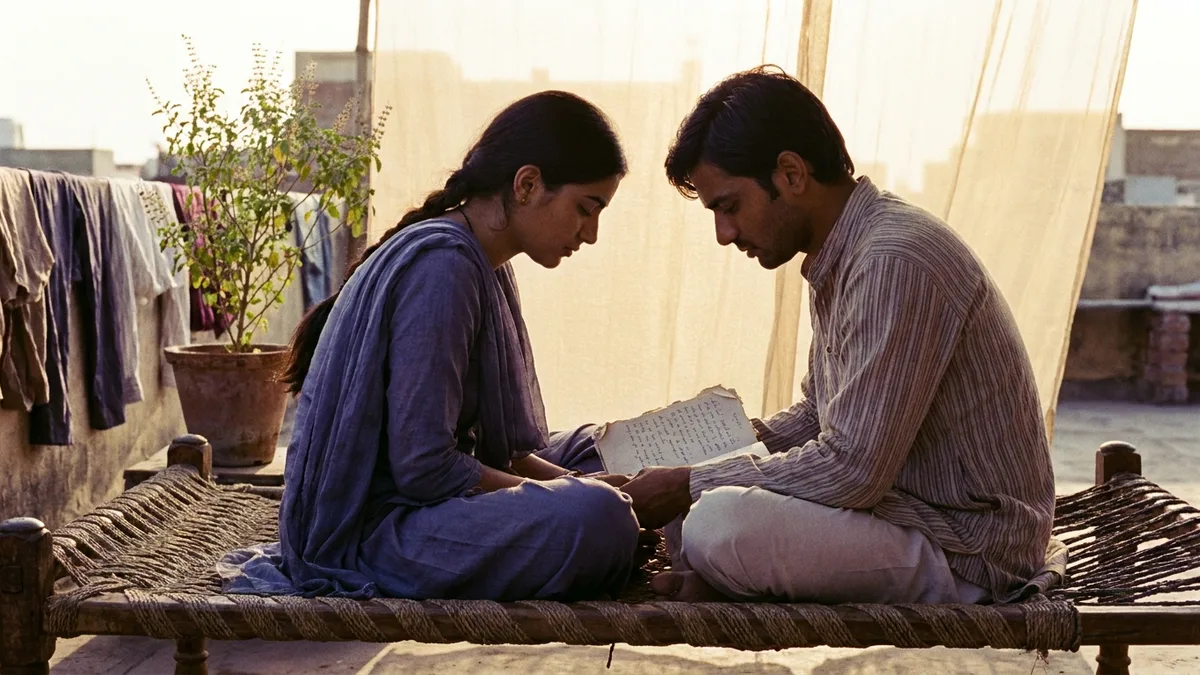
What is the meaning of dowry?
Dowry is money, property or valuables given, or promised, in connection with a marriage. Under Indian law that covers cash, gold, a car, a flat, a "contribution" to a business, or a promise of any of these, whether it moves before, at or after the wedding. Mahr under Muslim personal law is not dowry.
That definition comes from Section 2 of the Dowry Prohibition Act, 1961. The words that matter are "in connection with the marriage". A gift is not dowry because it is large. It becomes dowry when it is the price of the wedding going ahead, or of the bride being treated well afterwards.
Most couples who search for dowry are not reading a law textbook. They are sitting with a phone in one hand and a family WhatsApp group in the other. A relative has said "we don't want anything, just give what you wish for your daughter", and both of you know what that means. Or your parents want to give a car "so she is respected there", and you don't know how to tell them it worries you.
This is a conversation you have to have with each other first, then with two sets of parents who love you and grew up with different rules. Before either of you says anything to family, it helps to get your own thoughts straight. Adoree is an AI relationship assistant each of you can talk to privately, by voice or text, at any hour. Say what you are afraid of, what your parents expect, and what you want, and Adoree can help you plan how to raise it with parents or in-laws.
Where dowry came from, and why it still happens
Dowry has a long history in Europe, South Asia and other parts of the world, and it is most common where a bride moves to live with or near her husband's family, as Encyclopaedia Britannica notes. In Europe it largely disappeared in the 19th and 20th centuries. In South Asia it grew, and Britannica records that grooms' parents have sometimes asked for compensation for a son's education and future earnings.
In many Indian families the older idea was something closer to a daughter's share: jewellery and household things given to her, for her. Over time, in many communities, that turned into an expectation set by the groom's side. That is the version the law targets.
It still happens because each family feels watched. The bride's parents worry their daughter will be looked down on if they give less than the neighbours did. The groom's parents worry about what relatives will say if they ask for nothing. Very few people in the room want the arrangement. Everyone is afraid to be the first to stop.
Dowry law in India: the Dowry Prohibition Act, 1961
The Dowry Prohibition Act, 1961 makes giving, taking and demanding dowry offences everywhere in India. Both sides can be punished. The Act also makes any dowry agreement void, says dowry received by anyone else belongs to the bride, and treats customary, unasked-for gifts that are properly listed differently from dowry.
This is general information, not legal advice. For your own situation, speak to a lawyer or your District Legal Services Authority.
| What the Act says | Section | In plain words |
|---|---|---|
| Giving or taking dowry | 3 | At least 5 years in prison, plus a fine of at least ₹15,000 or the dowry's value |
| Demanding dowry | 4 | A separate offence, up to 2 years in prison |
| Dowry agreements | 5 | Void, so no one can enforce a "deal" |
| Dowry held by in-laws | 6 | Belongs to the bride, held in trust for her |
| Nature of offences | 8 | Non-bailable and non-compoundable |
The penalty in Section 3 and the classification in Section 8 come from the amended Act as summarised in the government booklet Dowry Related Offences and the Dowry Prohibition Act. A court can go below five years only for "adequate and special reasons" written into the judgment. The two-year maximum for demanding dowry is stated by the Supreme Court in Arnesh Kumar v. State of Bihar (2014). Sections 5 and 6 are in the Act's text.
Gifts versus dowry
Families worry that the law bans every wedding gift. It doesn't. According to the same government booklet, presents to the bride or groom are not an offence when they are given without any demand, are customary, are not excessive for the giver's financial status, and are entered in a written list. The list records each gift, its rough value, who gave it and their relationship, and is signed by both bride and groom.
| Usually a gift | Usually dowry |
|---|---|
| Given freely, nobody asked | Asked for, hinted at, or negotiated |
| In line with what the giver can afford | Stretching the bride's family into loans |
| Listed and signed by both of you | Off the books, "between the elders" |
| Given to the bride or groom | Given to in-laws as a condition |
Dowry law under the BNS: cruelty and dowry death
Since 1 July 2024 the Bharatiya Nyaya Sanhita has replaced the Indian Penal Code, as the Ministry of Home Affairs confirmed. Cruelty by a husband or his relatives is now BNS Section 85 (formerly IPC 498A). Dowry death is now BNS Section 80 (formerly IPC 304B). The wording carried over almost unchanged.
From the BNS as published in the Gazette:
| Offence | BNS section (2024) | Formerly | Punishment |
|---|---|---|---|
| Cruelty by husband or his relatives | 85, defined in 86 | IPC 498A | Up to 3 years and a fine |
| Dowry death | 80 | IPC 304B | 7 years to life imprisonment |
Cruelty under Section 86 has two limbs. One is wilful conduct likely to drive a woman to suicide or to cause grave injury or danger to her life, limb or health, mental or physical. The other is harassing her, or her family, to meet an unlawful demand for property or valuables, or because they could not meet one.
Dowry death under Section 80 is the death of a woman by burns, bodily injury or otherwise than under normal circumstances, within seven years of marriage, where she was subjected to cruelty or harassment for dowry by her husband or his relatives soon before her death.
The law also protects families from automatic arrest. In Arnesh Kumar v. State of Bihar (2014), the Supreme Court told police not to arrest automatically when a cruelty case is registered, and to record why an arrest is necessary. That judgment was given under the old IPC and CrPC. Being careful about arrests and taking every complaint seriously are both part of the law.
How common is dowry in India today?
Dowry is still reported in large numbers. According to NCRB's Crime in India 2023 report, as reported by PTI, 15,489 cases were registered under the Dowry Prohibition Act in 2023, up from 13,479 in 2022, and 6,156 people died in dowry death cases.
| NCRB figure | Count |
|---|---|
| Cases under the Dowry Prohibition Act, 2022 | 13,479 |
| Cases under the Dowry Prohibition Act, 2023 | 15,489 |
| Dowry deaths, 2023 | 6,156 |
These are registered cases, so they count what reached the police, not every family that paid or asked quietly.
How to say no to dowry as a couple
Agree with each other first, privately and in detail. Then speak to both families together, early, before any number is mentioned. A joint no is far harder to argue with than one partner pushing alone, and starting before the roka or engagement saves everyone from walking something back.
Step 1: Get on the same page. Ask each other three questions. What does each of our families expect? What would we be comfortable with, if anything (for example, gifts to the bride in her own name, listed and signed)? Who speaks to which parents first? If you disagree, sort that out before anyone else hears about it.
Step 2: Talk to your own parents first. Each of you speaks to your own family, because a son can say things to his mother that a future daughter-in-law cannot. Lead with what they want, which is a happy marriage and respect for their child.
For the groom, to his parents:
"Ma, Papa, we don't want to take anything from her family. Not cash, not a car, not 'whatever they wish'. I'm earning, we'll build our own home. If anyone asks, please say it was our decision. Let me be the bad guy."
For the bride, to her parents:
"I know you want to give because you love me and you're worried about how they'll treat me. Giving more won't protect me. What protects me is that he and I have already agreed on this. If you want to give me something, give it to me, in my name, and we'll list it."
Step 3: Tell both families together. A short call or visit where you are both present, with one sentence you have agreed on word for word:
"We've decided together: no dowry, no exchange of gifts between families, and we'll split the wedding costs in a way we're both comfortable with. We'd love your blessing for that."
Step 4: Plan for the hints. Most pressure is never a direct demand. It sounds like "people will talk", "our relatives expect", or "just a small thing for the in-laws". Agree in advance that you will answer every hint with the same calm line, and that the partner whose family raised it will reply.
"We hear you. Our answer is still no, and we're both sure about it."
For more on holding a line without a fight, see how to set boundaries in a relationship. And if money is the deeper fight between you two, how to stop fighting about money covers the patterns underneath.
Rehearsing helps. Say your line to Adoree first and hear how it lands, then adjust the words for your own family. Each partner talks to Adoree in a separate, private conversation, so you can each be honest about your own parents before you face them together.
If demands start after the wedding
Write things down, tell someone you trust, and get support early. Demands that come after marriage, with taunts, threats or being sent back to your parents' home, can amount to cruelty under BNS Section 85. You do not have to wait for it to get worse before asking for help.
- Keep a record. Dates, what was said, messages, who was present. Keep copies of the gift list if you made one.
- Tell your partner, if it's coming from his family. Many husbands do not know the full extent of what their parents are saying. Say: "I need you to hear what your mother said to me today, and I need you to answer it, not me."
- Get legal guidance. Women are entitled to free legal services under Section 12 of the Legal Services Authorities Act, as listed by NALSA. The NALSA helpline is 15100.
- If you feel unsafe, treat it as a safety issue first. Our guide to when yelling becomes abuse has signs to look for.
If you are in danger or being harassed for dowry: call 112, India's emergency number under the Emergency Response Support System. The Women Helpline 181 offers 24x7 response and links women with police, One Stop Centres and other services, according to the government. If you are struggling to cope, Tele-MANAS is free on 14416.
A marriage that starts with no price on it
Saying no to dowry rarely takes one dramatic conversation. It takes two people who agree, a few calm sentences said many times, and parents who slowly see that their child is happy. Most families come round, especially when the couple asks for their blessing rather than their permission.
If you want to think it through first, or plan exactly what to say to your parents or in-laws, Adoree is there any time, by voice or text. You can read more guides written for couples in India on Adoree India, or browse more on family and conflict.
Frequently asked questions
What is the meaning of dowry?
Dowry is any property or valuable security given, or agreed to be given, by one side of a marriage to the other, or by parents or anyone else, in connection with the marriage. It can be cash, gold, a car, a flat or a promise of any of these. Mahr under Muslim personal law is not dowry.
Is dowry illegal in India?
Yes. The Dowry Prohibition Act, 1961 makes giving, taking and demanding dowry offences across India. Any agreement to give or take dowry is void. Harassment for dowry and dowry death are separately punished under the Bharatiya Nyaya Sanhita, which replaced the Indian Penal Code on 1 July 2024.
What is the punishment for taking or giving dowry?
Under Section 3 of the Dowry Prohibition Act, giving, taking or helping with dowry carries at least five years in prison and a fine of at least fifteen thousand rupees or the value of the dowry, whichever is more. A court can give less than five years only for special reasons recorded in the judgment.
Are wedding gifts to the bride counted as dowry?
Not automatically. Presents given to the bride or groom without any demand, that are customary, not excessive for the giver's means, and entered in a written list signed by both bride and groom, fall outside the offence. A gift that was asked for, or tied to the marriage going ahead, is dowry.
What is the new section for 498A under the BNS?
Cruelty by a husband or his relatives, formerly IPC Section 498A, is now Section 85 of the Bharatiya Nyaya Sanhita, with the meaning of cruelty in Section 86. It carries up to three years in prison and a fine. Dowry death, formerly IPC 304B, is now BNS Section 80.
Can the bride's family be punished for giving dowry?
Yes. Section 3 of the Dowry Prohibition Act punishes anyone who gives, takes or abets dowry, so the law treats the giving family as offenders too. In practice, this is one reason couples find it easier to refuse together: neither family is asked to break the law.
How do I file a dowry complaint in India?
In an emergency call 112. Otherwise you can go to the nearest police station, call the Women Helpline on 181 to be connected to police and support services, or contact your District Legal Services Authority. Women are entitled to free legal services, and NALSA's helpline is 15100.
Plan the conversation before you have it.
Tell Adoree what each family expects and what the two of you want, by voice or text, any hour. Each of you gets a private conversation, and Adoree helps you plan what to say to parents and in-laws.
Talk to Adoree →Ask Adoree
You just read about it. Now tell me yours — I'll tell you what it's really about.
More on this: Love, marriage and family in India, every guide in one place →
References
- Dowry Prohibition Act, 1961 (Act No. 28 of 1961), text. Meghalaya Police, Government of Meghalaya. https://megpolice.gov.in/sites/default/files/Dowry_Prohibition_Act.pdf
- Dowry Related Offences and the Dowry Prohibition Act (penalties, list of presents). Government district portal (S3WaaS, NIC). https://cdnbbsr.s3waas.gov.in/s3100d9f30ca54b18d14821dc88fea0631/uploads/2022/07/2022070167.pdf
- The Bharatiya Nyaya Sanhita, 2023 (Act 45 of 2023), Sections 80, 85, 86. Gazette of India, Ministry of Law and Justice. https://egazette.gov.in/WriteReadData/2023/250883.pdf
- New criminal laws in force from 1 July 2024. Press Information Bureau, Ministry of Home Affairs. https://pib.gov.in/PressReleasePage.aspx?PRID=2039055
- Arnesh Kumar v. State of Bihar (2014), Criminal Appeal 1277 of 2014. Supreme Court of India. https://api.sci.gov.in/jonew/judis/41736.pdf
- Dowry-related cases rise 14% in 2023 (NCRB Crime in India 2023, via PTI). Deccan Chronicle. https://www.deccanchronicle.com/nation/dowry-related-cases-rise-14-in-2023-over-6100-deaths-reported-ncrb-1907401
- Dowry. Encyclopaedia Britannica. https://www.britannica.com/topic/dowry