
Key takeaways
- A 2010 Journal of Family Psychology study found infidelity couples show no worse outcomes than other couples in therapy by the 6-month mark
- Recovery takes 12 to 24 months on average; shorter timelines usually mean unresolved hurt
- Both partners experience infidelity differently and each needs private space to process before joint sessions can fully work
- Starting therapy doesn't mean you've decided to stay; it means you're gathering information from a clearer place
- Therapy approaches that target infidelity specifically (Gottman Trust Revival Method, EFT) outperform generic couples counseling
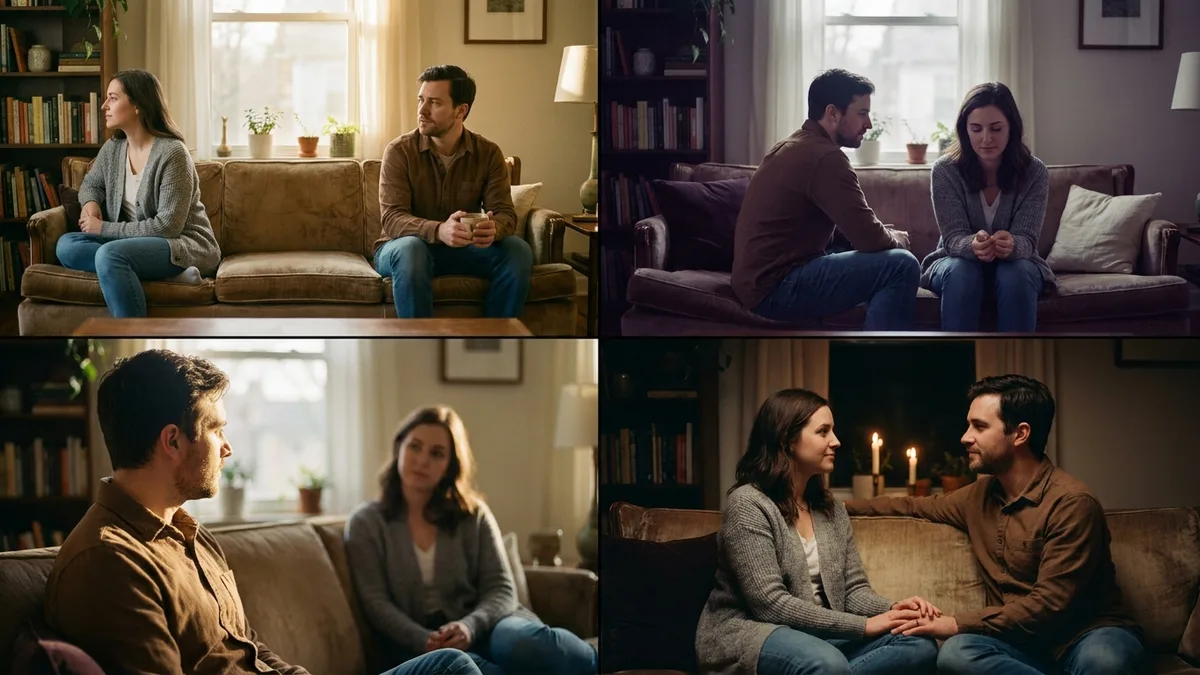
Should You Even Try Therapy After Infidelity?
The most common question couples ask after discovery is not "what do we do in therapy?" It's "are we even worth trying to save?" That question doesn't need to be answered before you book your first session.
Couples infidelity therapy is not a commitment to stay together. It's a structured space to figure out what you both actually want, understand what happened, and make a more informed decision than you can make in the first days of crisis. Going in undecided is not a sign of weakness. It's honest.
A 2010 study in the Journal of Family Psychology compared 145 couples dealing with infidelity against 385 couples who entered therapy for other reasons. Infidelity couples were significantly more distressed at the start. By the six-month follow-up, their outcomes showed no statistically significant difference from the other group. The researchers called this "generally optimistic." The weight of what happened doesn't determine where you end up.
What Actually Happens in Infidelity Therapy
Infidelity therapy isn't one session of confrontation followed by forgiveness. It moves through distinct phases, and each one has a purpose.
| Phase | Focus | Typical Duration |
|---|---|---|
| Crisis stabilization | Establish basic safety and ground rules | Weeks 1 to 4 |
| Understanding the why | Explore what led to the affair, without assigning blame | Months 1 to 3 |
| Rebuilding trust | Transparency, accountability, new agreements | Months 3 to 12 |
| Deciding the future | Stay, separate, or continue working from a clearer place | Ongoing |
Crisis stabilization looks like practical agreements: how you'll talk about the affair at home, what information the betrayed partner needs, and what both people need to feel safe enough to keep showing up.
Understanding the why is the part people often resist. It's not about excusing the infidelity. It's about recognizing that affairs almost always connect to something, including unmet needs, avoidance patterns, and personal struggles, that will resurface if left unexamined.
Rebuilding trust is slower than most couples expect. Trust doesn't return in a conversation or even a month. It rebuilds through accumulated evidence: the unfaithful partner being where they said they'd be, answering questions without defensiveness, choosing transparency when concealment would have been easy.
Which Therapy Approaches Work Best
Not every couples therapy method is designed for infidelity. Two approaches have the most clinical support specifically for betrayal recovery.
Emotionally Focused Therapy (EFT) addresses the attachment disruption that infidelity creates. When one partner betrays the other, the most fundamental assumption of the relationship (that this person is safe) is shattered. EFT rebuilds that emotional bond by helping each partner understand their own attachment patterns and express needs without triggering defenses.
The Gottman Trust Revival Method breaks recovery into three phases: Atonement (the unfaithful partner takes full responsibility and the betrayed partner asks their questions), Attunement (both partners understand each other's inner worlds more deeply), and Attachment (the couple builds new agreements that replace the old ones that broke down).
Generic couples counseling focused on communication skills without addressing betrayal specifically tends to miss what infidelity actually damages: the sense of safety, the shared narrative of the relationship, and each partner's ability to trust their own perception.
| Approach | Best For | Core Method |
|---|---|---|
| Emotionally Focused Therapy | Attachment wounds, emotional disconnection | Rebuild emotional bond through attachment patterns |
| Gottman Trust Revival Method | Structured accountability and new agreements | Atone, Attune, Attach phases |
| Integrative Behavioral Couple Therapy | Long-standing communication breakdown alongside affair | Acceptance + direct behavior change |
The Part That's Rarely Talked About: Both Partners Are Processing Separately
Most writing about infidelity therapy focuses on what happens together in the room. But both partners are also carrying a private experience they can't fully share in joint sessions.
The betrayed partner is managing grief, rage, intrusive thoughts, and often a devastated sense of self. The unfaithful partner is navigating shame, guilt, and often a confused understanding of their own motivations. When both arrive at a joint session without having processed any of that privately, the session spends its time on emotional management rather than real progress.
This is the gap where individual therapy alongside couples work matters most. It's also where having a space to think through what you feel before you say it makes a genuine difference, not as a replacement for professional support, but as the connective tissue between sessions.
What the Betrayed Partner Needs to Know
Therapy asks a lot of the betrayed partner. You didn't cause this, but recovery asks you to eventually engage with someone who hurt you deeply. That's not fair. It's also not optional if the relationship is going to move forward.
A few things that research and clinical experience consistently point to:
- You're allowed to ask the same questions more than once. Intrusive repetition is normal after betrayal, and a good therapist will help your partner answer without making you feel like you're being difficult.
- The timeline is yours. Some couples push toward forgiveness on a schedule. That's counterproductive. Forgiveness, if it comes, is a release you eventually give yourself. It's not a gift you hand your partner when they've earned enough.
- Your anger doesn't have an expiration date, but it does need somewhere to go. Joint sessions often aren't the right place for the rawer moments. Individual sessions, or time with a trusted person who isn't invested in your relationship's survival, matter.
What the Unfaithful Partner Needs to Know
Accountability is not a single conversation. It's a sustained posture. Most therapists working with infidelity describe this similarly: the unfaithful partner's job in recovery is to be radically transparent for as long as the betrayed partner needs, without making that transparency feel like a burden they're imposing.
The questions will come again. The same ones. At 11pm. On a Tuesday. Two years in. Answering them calmly, honestly, without the undertow of "I thought we were past this" is the actual trust-building work.
Individual therapy for the unfaithful partner is nearly essential. It's the place to honestly examine what led to the choice, without protecting your partner from the answer or overwhelming them with it.
How Long Does Recovery Actually Take
Most clinical experience and the available research put meaningful recovery at 12 to 24 months. That doesn't mean two years of misery. It means two years of consistent work, with visible progress throughout.
The factors that compress the timeline:
- The unfaithful partner ends all contact with the affair partner immediately and voluntarily
- Full transparency, including access to accounts and devices, is maintained without being asked
- Both partners are genuinely willing to look at the relationship that existed before the affair
- Each partner also has individual support running alongside couples sessions
| Sign | Recovery on Track | Recovery Stalled |
|---|---|---|
| Questions from betrayed partner | Answered openly, without resentment | Deflected or met with "I thought we were past this" |
| Contact with affair partner | Completely ended | Vague or still ongoing |
| Emotional tone at sessions | Softer, more curious | Defensive or shutdown |
| Day-to-day transparency | Volunteered, not demanded | Given only when asked |
Couples who try to shortcut the process (moving to forgiveness before understanding, or skipping the why phase because it's uncomfortable) often find themselves at the same point 18 months later, except now there's additional resentment layered on top. To go deeper on resentment specifically, see our guide to couples therapy for resentment.
When Therapy Doesn't Save the Relationship
Not every couple that enters infidelity therapy stays together. That's not a therapy failure.
Sometimes the right outcome of a structured process is a clearer, more humane separation than the couple would have managed without it. Sometimes one person realizes mid-process that they were already out before the affair, and the affair was a symptom of that. Sometimes the betrayed partner works through everything available and concludes, with full clarity, that the relationship no longer contains what they need.
Therapy doesn't guarantee reconciliation. It guarantees a more honest process. That matters for whatever comes next, including navigating what to expect in a first session if you're ready to take the first step.
Where Adoree Fits In
Adoree is an AI relationship assistant. It talks to each partner privately, holds both perspectives without judgment, and helps couples think through what they're feeling in between sessions.
After infidelity, the space between appointments can be overwhelming. Questions surface at midnight. Conversations spiral before anyone's ready. Adoree doesn't replace clinical infidelity work. Nothing should. What it does is give both partners a consistent place to process, separate from each other, so that when they do come together, they're arriving from a more settled place.
If you're navigating this, try Adoree free for seven days and see if having that private space between sessions makes a difference.
Frequently asked questions
How long does couples infidelity therapy take?
Most research and clinical experience puts recovery at 12 to 24 months, assuming both partners are genuinely engaged. Recovery in six weeks usually means one or both people are bypassing rather than processing. The timeline shortens when both partners show up consistently and the unfaithful partner is fully transparent.
Should I try couples therapy if I haven't decided whether to stay?
Yes. Infidelity therapy is not a commitment to save the relationship. It's a way to make an informed decision. Many therapists explicitly structure the early phase around helping both people understand what they want before committing to a direction. Going in without a verdict is completely normal.
What is the success rate of therapy after infidelity?
A 2010 study in the Journal of Family Psychology found that by the 6-month follow-up, infidelity couples who went through therapy showed no significant difference in outcomes compared to couples who sought therapy for other issues, a genuinely optimistic finding. Broader surveys suggest 60 to 75 percent of couples who pursue structured support stay together, though definitions of success vary.
Does the person who cheated need individual therapy too?
Almost always. Infidelity rarely comes from nowhere; it tends to connect to patterns, unmet needs, or personal struggles that couples therapy alone won't fully address. Individual sessions alongside joint ones give each partner room to work on their own piece without flooding shared sessions.
Can an AI relationship assistant replace infidelity therapy?
No. Adoree doesn't try to. Infidelity is one of the most significant ruptures a relationship can face, and professional clinical support is the right foundation. What an AI relationship assistant can do is help both partners reflect between sessions, surface what they're actually feeling before they sit down together, and keep communication moving on ordinary days.
Meet Adoree.
Adoree is an AI relationship assistant built for couples. It hears both partners privately, remembers everything, and helps you actually move forward. Free for 3 days.
Try Adoree free →Your version of this
You just read about the pattern. Tell me yours — I’ll tell you which one you’re in.
Three messages, free, no sign-up. Nothing is saved unless you keep it.
References
- Outcomes of couples with infidelity in a community-based sample of couple therapy. Atkins DC, Marin RA, Lo TT, Klann N, Hahlweg K. Journal of Family Psychology, 2010. https://pubmed.ncbi.nlm.nih.gov/20438197/
- General Social Survey: Infidelity rates in U.S. marriages. NORC at the University of Chicago. https://gssdataexplorer.norc.org/
- Infidelity and Betrayal, San Francisco Marriage and Couples Center. San Francisco Marriage and Couples Center. https://sanfranciscomarriagecenter.com/infidelity-and-betrayal