
adoree Ask me in one tap
Key takeaways
- Contempt means feeling and acting as if your partner is lesser than you. It shows up as eye-rolls, sarcasm, mockery, sneering and hostile humor.
- Criticism attacks what your partner did. Contempt attacks who they are, from a position of superiority.
- The Gottman Institute calls contempt the number one predictor of divorce, and a 14-year study by Gottman and Levenson found negative affect during conflict predicted early divorce.
- Research on anger and contempt suggests contempt often grows out of anger that never got resolved, and it pushes toward distance rather than repair.
- The short-term antidote is to say what you feel and need. The long-term antidote is a daily habit of appreciation that makes contempt harder to reach for.
What is contempt in a relationship?
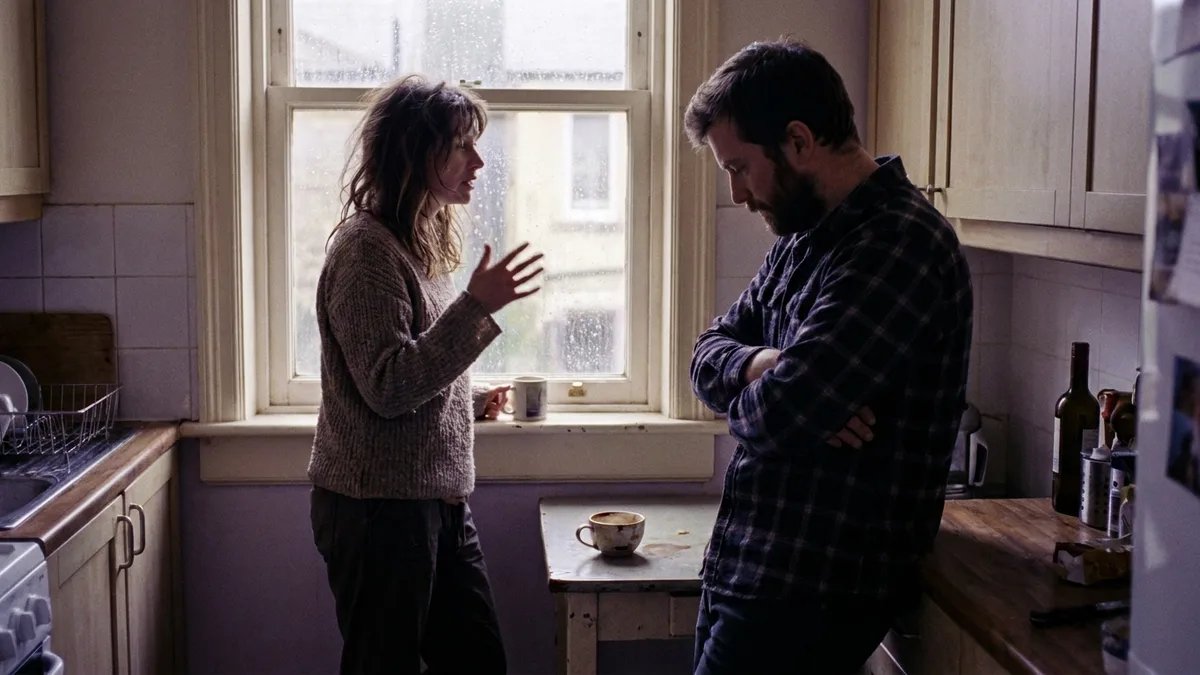
Contempt in relationships is any word, tone or look that tells your partner you think you are better than them. The eye-roll while they explain. The sarcastic "wow, great plan." Mimicking their voice. A nickname that is really an insult. Criticism says you did something wrong. Contempt says you are something lesser.
John Gottman's research names contempt as one of the four horsemen, the four conflict patterns that predict a couple is in trouble, alongside criticism, defensiveness and stonewalling. The Gottman Institute calls contempt the worst of the four and the number one predictor of divorce.
Here is the uncomfortable part. Almost nobody thinks of themselves as contemptuous. They think they are tired, right, or funny. And the partner on the receiving end usually feels it long before either of you has a name for it. Below: what contempt means, how to spot it, why it does so much damage and what to say instead, plus how Adoree, an AI relationship assistant that talks with each partner privately, helps you both untangle it.
What does contempt mean? The plain definition
Contempt means a feeling that someone or something is worthless or beneath you. Dictionary.com defines it as disdain or scorn for something regarded as mean, vile or worthless. The word came into English in the late 1300s from the Latin contemptus, meaning scorn.
There are three common senses of the word, and only one of them is about love:
| Sense | Contempt meaning | Example |
|---|---|---|
| Feeling | Disdain or scorn for something seen as worthless | "She looked at the offer with contempt." |
| State | Being despised or disgraced | "He was held in contempt by his peers." |
| Legal | Disobeying or disrespecting a court or legislature | "Contempt of court." |
In a relationship, contempt is the first sense pointed at one person. The Paul Ekman Group, which studies facial expressions of emotion, describes it as dislike plus a sense of superiority, usually moral. Their shorthand fits most couples' fights: I'm better than you, and you are lesser than me.
Ekman's group also notes that contempt is the only emotion with a one-sided facial expression. That lopsided half-smirk is often how a partner knows it is there before a single word is said.
Examples of contempt: what it looks and sounds like
Contempt rarely announces itself. It hides inside jokes, sighs and "I'm just being honest." Here is what it tends to look like:
- Eye-rolling. The quickest one, and the easiest to deny ("I didn't roll my eyes").
- Sarcasm. "Oh, thank you for finally doing the dishes. Should I throw a parade?"
- Mockery and mimicking. Repeating your partner's words back in a whiny voice.
- Name-calling. Lazy, useless, pathetic, crazy, said directly or "as a joke."
- Hostile humor. Teasing in front of friends that only one of you laughs at.
- Sneering and scoffing. The snort, the half-smile, the "pfft."
- Correcting as a performance. "Actually, that's not what happened," aimed at the audience, not the fact.
- Belittling their worries. "You're stressed? About that?"
A useful test is to ask what the message underneath is. If the message is "I need something from you," it is probably a complaint. If the message is "you are ridiculous," it is contempt.
| What was said | What it is | What it tells your partner |
|---|---|---|
| "You forgot the bins again." | Complaint | A specific thing went wrong |
| "You always forget. You never think about anyone but yourself." | Criticism | Your character is the problem |
| "Wow. A grown adult who can't remember bin day." eye-roll | Contempt | You are beneath me |
Why contempt predicts breakups
Contempt does more damage than ordinary anger because it changes what the fight is about. Anger wants your partner to change something. Contempt has already decided they are the problem, and stops expecting them to change.
That difference shows up in the research. In three studies on anger and contempt, Fischer and Roseman found that anger tended to bring short-term attack followed by long-term reconciliation. Contempt brought rejection and social exclusion of the other person, both in the short and the long term. They also found that contempt can develop out of anger people had felt before toward the same person, and that a lack of intimacy and negative beliefs about the other person's character predicted it.
Put plainly: contempt is often anger that never got resolved, hardened into a verdict.
Gottman's long-term work with couples points the same way. In a study following couples over 14 years, Gottman and Levenson found that negative affect during conflict predicted divorcing early in the marriage, while a lack of positive affect predicted divorcing later. Their model, using marital satisfaction, thoughts about splitting up and how couples interacted, predicted divorce with 93% accuracy.
The Gottman Institute also reports that couples who are contemptuous of each other are more likely to suffer infectious illnesses such as colds and flu. Whatever the exact mechanism, living with someone who seems to look down on you is wearing.
Why both of you probably feel like the victim
Contempt is rarely one-sided for long. One partner rolls their eyes at the other's lateness. The other starts mocking the first one's "control freak" lists. Each person remembers the other's digs vividly and their own as justified.
This is where most advice falls short. It tells you to stop being contemptuous, as if only one person is doing it. In practice, the eye-roll and the sarcastic comeback are two halves of one loop, and each partner's contempt is the other's evidence.
That is also why couples find it hard to sort out together, in the moment. You need somewhere to say the unfiltered version first ("honestly, I can't stand how helpless they act") without saying it to your partner.
This is what Adoree is for. Adoree is an AI relationship assistant that talks with each partner privately. Each of you has your own space, so you can bring the raw version, hear the need underneath it, and leave with a sentence you can actually say out loud. Because Adoree hears both sides, the same loop gets seen from both ends, without anyone being declared the winner. You can read more about who builds Adoree and why.
Which horseman showed up in your last fight?
Contempt often travels with the other three. A complaint turns into criticism, criticism gets a defensive answer, the defense gets an eye-roll, and someone shuts down. Knowing which pattern you reached for first tells you where to start.
The most telling question is the one about the line you'd least want overheard. If it was something said with that look, dismissive and superior, contempt was in the room.
The antidote to contempt: what to do instead
The Gottman Institute describes a two-part antidote: describe your own feelings and needs in the moment, and build a culture of fondness and admiration over time.
In the moment: say what you feel and need
Contempt is a shortcut. It skips over the feeling (hurt, exhaustion, embarrassment) and goes straight to a verdict on your partner. The fix is to go back and say the feeling.
The formula is simple: I feel (one feeling) about (one specific situation), and I need (one positive request).
| Instead of this | Try this |
|---|---|
| eye-roll "Here we go again." | "I'm getting frustrated. Can we finish this after dinner?" |
| "Wow, late again. Shocking." | "I felt embarrassed waiting alone. Can you text me if you're running behind?" |
| "Do you need me to draw you a diagram?" | "I don't think I explained that well. Can I try again?" |
| "You're so dramatic." | "I can see this is big for you. Help me understand what's hardest." |
| "Must be nice to sit around all day." | "I'm exhausted. I need you to take bath time tonight." |
| "Sure, you handle the money." | "I'm anxious about the budget. Can we look at it together Sunday?" |
How you open matters a lot. In a study of 124 newlywed couples, Carrère and Gottman could predict which marriages would last over six years using just the first three minutes of a conflict discussion. Our guide to the Gottman soft start-up walks through how to open a hard conversation gently.
Over time: build a culture of appreciation
Contempt grows when you are scanning your partner for faults. The long-term antidote is to deliberately scan for what they do well, and say it.
The Gottman Institute's magic ratio puts a number on it: during conflict, stable and happy couples have about five positive interactions for every negative one. Appreciation is how you stack the positives.
Small habits work better than grand gestures:
- Name one specific thing a day. "Thank you for handling the call with your mum" beats "you're great."
- Thank them for the invisible jobs. Booking the dentist, remembering the birthday, refilling the coffee.
- Tell the story of how you met. Remembering why you chose them is hard to do with contempt.
- Praise them in front of others. The reverse of the public dig.
- Catch the eye-roll and swap it. Each time you feel one coming, find the need behind it and say that instead.
Adoree has a couple game built for exactly this. In Three Appreciations, each of you answers on your own phone ("What's one thing they did recently that you appreciated but never mentioned?"), the answers reveal once you've both played, and Adoree adds a note on what they say about you two. It takes a few minutes and works best on an ordinary weeknight.
What if your partner shows contempt for you?
When you are on the receiving end, the instinct is to fire back or go quiet. Both tend to feed the loop. Try this instead:
- Name it calmly, later. "When you rolled your eyes at dinner, I felt small. I want us to stop doing that to each other." Raising it in the heat of the moment rarely works.
- Own your side. Notice whether you have been giving some back. "I know I've been sarcastic too" makes it a shared problem.
- Ask for the complaint underneath. "What were you actually frustrated about?" turns a verdict back into something you can fix.
- Watch for the pattern, not one bad night. Everyone has a sharp moment. Contempt is the default tone.
If contempt comes with threats, control, or feeling afraid of your partner, that is a safety issue rather than a communication one. The National Domestic Violence Hotline is free, confidential and open 24/7 at 1-800-799-7233.
Can a relationship survive contempt?
Many can. Contempt is a habit, and habits can be unlearned, especially when both partners notice it early and want to stop. The couples who turn it around usually do three things: they stop the mockery first, they turn verdicts back into specific complaints, and they put appreciation back into ordinary days.
What makes it hard is that contempt is usually the visible end of something older, often resentment that was never said out loud. When that is true, the eye-rolls stop for good only once the original hurt gets heard.
Our hub on fighting and conflict has the rest of the patterns that travel with contempt, and what helps with each.
If you can't tell whose contempt started it, or you want to practice the first sentence before you say it, you can talk it through with Adoree tonight. Each of you in your own space, both sides heard.
Frequently asked questions
What does contempt mean?
Contempt means a feeling that someone or something is worthless or beneath you, usually mixed with scorn or disdain. In a relationship it means treating your partner as lesser than you, through mockery, sarcasm, eye-rolling or name-calling. In law, contempt also means disobeying or disrespecting a court, as in contempt of court.
What is contempt in a relationship?
Contempt in a relationship is any word, tone or look that tells your partner you think you are better than them. Eye-rolling, sarcasm, mocking their voice, sneering and insults all count. John Gottman's research names it one of the four horsemen, the four conflict patterns that predict a relationship is in trouble.
What are examples of contempt in a relationship?
Common examples are rolling your eyes while your partner talks, saying 'oh, great job' when they make a mistake, mimicking how they speak, calling them stupid or lazy, laughing at a worry they share, and correcting them in front of friends to get a laugh. The common thread is superiority.
Can a relationship recover from contempt?
Many can, especially when both partners notice it early and want to change. Recovery means stopping the mockery, turning contempt back into specific complaints about specific moments, and rebuilding everyday appreciation. If contempt has hardened over years or comes with fear or control, outside help matters more.
What is the difference between contempt and criticism?
Criticism attacks your partner's character with words like 'you always' or 'you never.' Contempt goes further and adds superiority, so the message becomes 'you are beneath me.' Criticism says you are doing something wrong. Contempt says you are something wrong, usually with sarcasm, an eye-roll or mockery.
Why is contempt the worst of the four horsemen?
Contempt is the hardest pattern to recover from because it attacks your partner's worth, not their behavior, and it makes them feel despised. The Gottman Institute calls it the number one predictor of divorce, and emotion research links contempt with rejecting and excluding the other person rather than trying to repair things.
What is the antidote to contempt?
Gottman's antidote has two parts. In the moment, describe your own feelings and needs ('I feel overwhelmed, I need help with the dishes tonight') instead of mocking. Over time, build a culture of fondness and admiration: notice what your partner does well and say it out loud, every day.
Say the hard thing to someone first.
Adoree is an AI relationship assistant that talks with each of you privately. Bring the eye-roll you can't stop, or the one you keep getting, and leave with the words for tonight.
Talk to Adoree →Ask Adoree
Same fight, again? Tell me how it goes — I'll show you the loop you're both stuck in.
More on this: Fighting and conflict, every guide in one place →
References
- Contempt is the Worst of the Four Horsemen. The Gottman Institute. https://www.gottman.com/blog/the-four-horsemen-contempt/
- The Timing of Divorce: Predicting When a Couple Will Divorce Over a 14-Year Period. Gottman and Levenson, Journal of Marriage and Family (2000). https://doi.org/10.1111/j.1741-3737.2000.00737.x
- Beat Them or Ban Them: The Characteristics and Social Functions of Anger and Contempt. Fischer and Roseman, Journal of Personality and Social Psychology (2007). https://doi.org/10.1037/0022-3514.93.1.103
- Predicting Divorce Among Newlyweds From the First Three Minutes of a Marital Conflict Discussion. Carrère and Gottman, Family Process (1999). https://doi.org/10.1111/j.1545-5300.1999.00293.x