
adoree Ask me in one tap
Key takeaways
- 16% of U.S. children live in a blended family, and 42% of American adults have at least one step relative.
- The couple relationship is under the most pressure. Parenting stress is the leading predictor of stepfamily breakup.
- Stepfamilies typically take 4 to 7 years to develop their own cohesive identity, not 4 to 7 months.
- The most common early mistake is rushing integration: expecting a stepparent to parent before the relationship can support it.
- Loyalty conflicts in children are normal and do not mean the stepparent is failing.
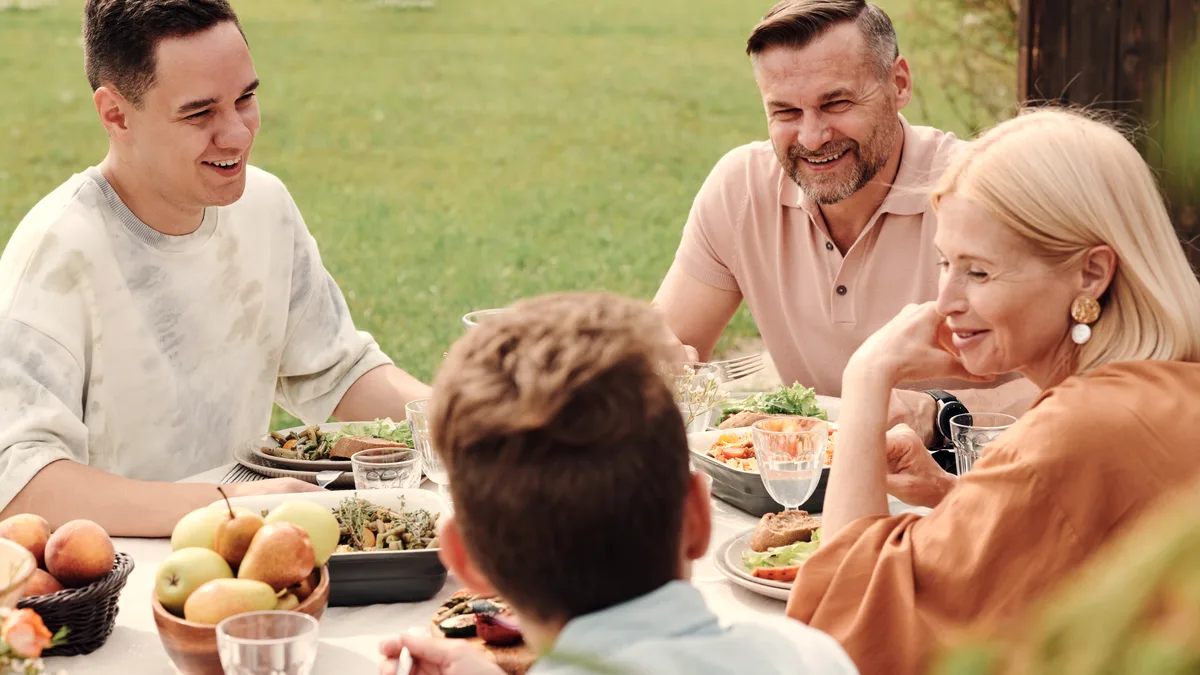
Search for blended family images and you will find a lot of stock photos: everyone arranged on a sofa, perfectly lit, smiling. Real blended family life looks different. It looks like a stepparent not knowing whether to hug a kid who just had a rough night. It looks like two parents with completely different rules eating dinner at the same table. It looks like love that is genuine and complicated in ways nobody warned you about.
What Is a Blended Family?
A blended family is any household where at least one adult partner has children from a previous relationship. It may include a stepparent, stepsiblings, half-siblings, or all three. The U.S. Census Bureau treats "blended family" and "stepfamily" as interchangeable.
They are more common than most people realize. According to Pew Research Center data, about 16% of U.S. children live in a blended family, and roughly 42% of American adults have at least one step relative: a stepparent, stepchild, or stepsiblings. Second and third marriages are the most common route in, though cohabiting couples raising children from previous partnerships create the same dynamic.
| Family type | % of U.S. children affected |
|---|---|
| Two biological parents | ~65% |
| Single parent household | ~26% |
| Blended / stepfamily | ~16% |
| Other arrangement | ~9% |
Note: percentages reflect overlapping categories; source: Pew Research Center (2015)
What Blended Family Life Actually Looks Like
The stock photo version: everyone gathered around a holiday table, kids and adults seamlessly interwoven, two parents who clearly adore each other and four kids who clearly adore them back.
The real version is more interesting.
There is the morning when the stepparent makes breakfast and the kids eat it without acknowledgment, and that is actually a good sign. There is the first birthday the whole family spends together and somebody cries in the bathroom and somebody else pretends not to notice. There is the stepparent who has been kind and present for two years and still gets called by their first name, and who has quietly decided that is fine.
Real blended family images, if you could capture them honestly, would show negotiation. A parent and stepparent talking quietly after the kids are in bed about what the rule should be on screens. A child who loves both homes and feels guilty about it. Gradual, non-linear moments of trust building.
That is not a complaint. It is just what building something new actually looks like.
The Challenges Nobody Tells You About
Loyalty conflicts in children are normal
Children in blended families frequently feel that caring for a stepparent is somehow a betrayal of the absent biological parent. This shows up as coldness, testing, or apparent indifference toward the stepparent. It is rarely personal. It is usually a child trying to hold on to both worlds at once.
Knowing this does not make it easier to absorb, but it changes what a stepparent does with it. The response that works is patience, consistency, and refusing to compete. Children eventually stop testing people who simply keep showing up without demanding anything back.
Two household cultures collide
Each household arrives with its own rules: about meals, screens, bedtime, how to handle anger, what counts as an emergency. When two of these households merge, every rule becomes a potential flashpoint. Not because anyone is wrong but because there was never a shared agreement in the first place.
Explicit conversations about which rules matter most, and why, tend to go better than trying to unify everything at once. Some differences in approach between homes are fine. Children handle inconsistency between households more readily than they handle open conflict about it.
The ex-spouse is part of the system
In most blended families, a former partner remains actively present through the children: in scheduling, in the values children bring from their other home, in how the kids react after weekends away. This is not an intrusion. It is the shape of the thing.
Couples who treat the co-parenting relationship as a threat tend to have more conflict than couples who treat it as a fact. The question is not how to make it smaller but how to manage it without letting it become the relationship's main weather.
How the Couple Relationship Changes
This is the piece most blended family resources underweight. The couple relationship tends to absorb the most stress.
Parenting disagreements, loyalty dynamics, and logistical complexity all land on the partnership. Many couples enter a blended family believing the hard part is the children's adjustment. It often turns out to be the two of them.
Stepfamily researcher Patricia Papernow, who has studied blended families for decades, found that it typically takes 4 to 7 years for a stepfamily to develop genuine cohesion. That is not a pessimistic finding. It is a realistic one, and it is useful because it sets reasonable expectations. Couples who expect to feel like a family in six months and do not are more likely to interpret normal stepfamily friction as evidence of failure.
The couples who do well tend to treat each other as a team first, stay physically and emotionally connected even under logistical pressure, and keep conversations about co-parenting and step dynamics out of their daily intimacy when possible. If the relationship is under real strain, support designed for stepfamilies specifically tends to be more useful than generic couples work, since the dynamics are genuinely different.
An AI relationship assistant like Adoree can help couples in blended families surface both sides of a disagreement without it turning into a full conflict, particularly around the parenting and ex-spouse conversations that tend to be the hardest to start. You can read more about how that works at adoree.ai/about.
What Actually Helps
A few things the research consistently points to:
| Strategy | Why It Helps |
|---|---|
| Biological parent leads early discipline | Keeps stepparent out of power struggles before trust is built |
| Slow the integration timeline | Gives children time to form real relationships rather than resentments |
| Protect couple time | The partnership is the foundation. It needs maintenance even under family pressure. |
| Name the loyalty conflict explicitly | Telling children it is okay to love both homes reduces the internal pressure they carry |
| Seek stepfamily-specific support | Generic advice built for first-time families often misses the actual dynamics |
Money disagreements are a common early pressure point in blended families, and they are almost always about fairness and loyalty before they are about finances. Getting the financial structure clear early removes one consistent source of conflict.
For the moments of daily connection, Adoree offers a way for both partners to work through their own perspectives on a situation separately before bringing them to each other, a structure that tends to reduce defensiveness, especially on topics where one person feels their parenting or loyalty is being questioned.
Blended families are not a compromise version of a family. They are a particular kind of family, with particular rhythms and particular strengths. The ones that work are not the ones that look most like a traditional household. They are the ones where the couple stayed steady while everything else was still forming.
Frequently asked questions
What is a blended family?
A blended family is a household where at least one adult partner has children from a prior relationship. It may include stepparents, stepsiblings, half-siblings, or some combination. The U.S. Census Bureau uses 'blended family' and 'stepfamily' interchangeably.
How common are blended families in the United States?
According to Pew Research Center data, about 16% of U.S. children live in a blended family, and roughly 42% of American adults have at least one step relative: a stepparent, stepchild, or step-sibling.
How long does it take for a blended family to bond?
Stepfamily researcher Patricia Papernow found that blended families typically take 4 to 7 years to develop genuine cohesion. Families that try to accelerate this timeline often run into more conflict, not less.
What are the biggest challenges for couples in blended families?
The couple relationship tends to absorb the most pressure. Parenting disagreements, loyalty conflicts, and ex-spouse dynamics all create stress that lands on the partnership. Many couples enter a blended family believing the hard part is the kids. It often turns out to be the two of them.
What is the biggest mistake stepparents make?
Taking on a disciplinary role before the relationship can support it. Research on stepfamily dynamics consistently recommends that the biological parent handle most discipline in the early years while the stepparent focuses on building a genuine relationship with the children first.
Ask Adoree
You just read about it. Now tell me yours — I'll tell you what it's really about.
References
- Blended Family Definition, Challenges, and What Helps. Co-Parenting Guide (citing Pew Research Center, 2015). https://coparentingguide.org/blended-family-guide/
- Pew Research Center: A Portrait of Stepfamilies. Pew Research Center (2011). https://www.pewresearch.org/social-trends/2011/01/13/a-portrait-of-stepfamilies/
- Surviving and Thriving in Stepfamily Relationships. Papernow, P. (2013). Routledge. https://www.routledge.com/Surviving-and-Thriving-in-Stepfamily-Relationships-What-Works-and-What-Doesnt/Papernow/p/book/9780415641593