
adoree Ask me in one tap
Key takeaways
- Strong stepparent-stepchild bonds typically take 4 to 7 years to develop. Shared meals are one of the earliest, lowest-stakes bonding opportunities.
- The three biggest mealtime friction points in blended families are loyalty conflicts, unshared food histories, and clashing rules from two households.
- Build-your-own meals (tacos, grain bowls, pizza nights) reduce power struggles because nobody has to lose.
- New food traditions work best when they do not replace existing ones. Let them sit alongside them.
- The couple's dynamic at the dinner table sets the tone for the whole room. When the adults are aligned, children follow.
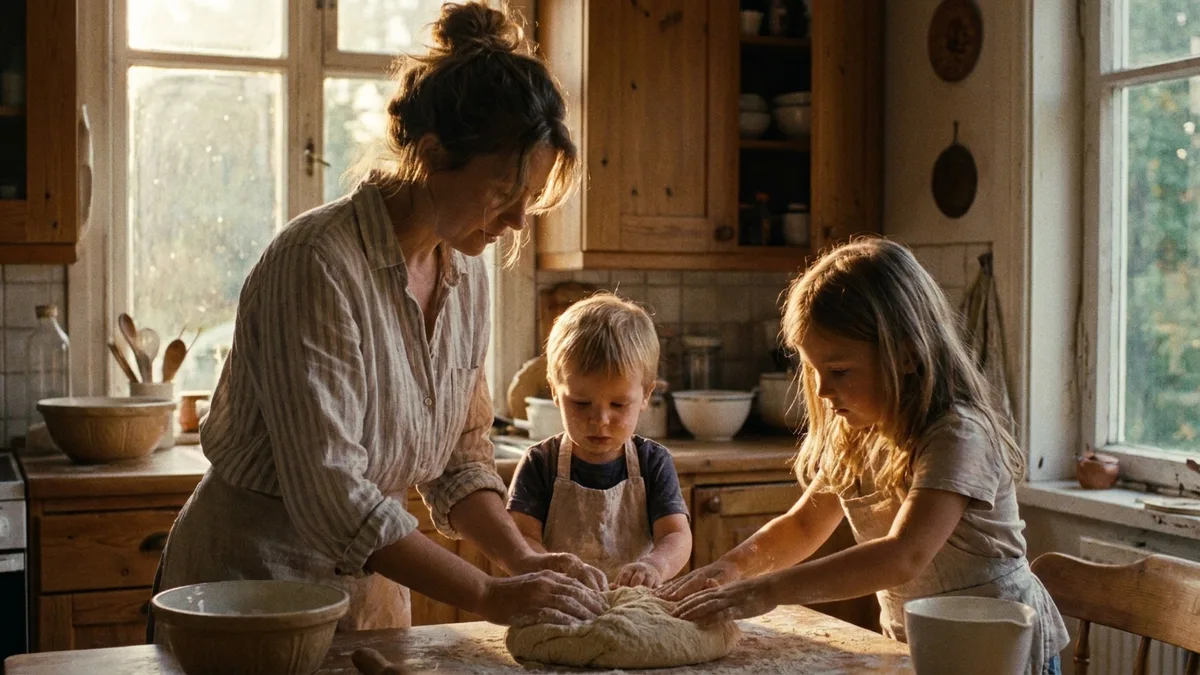
Blended family foods: it is not really about the food
When people search for blended family foods, they are usually looking for meal ideas that work across different tastes and ages. That is a real need. But the harder question sitting underneath every tense dinner in a stepfamily is why mealtimes feel so loaded in the first place.
Dinner in a blended family is where two different household systems first have to coexist. Different rules about screens at the table. Different expectations about manners, timing, cleanup. One parent's comfort food that the other parent has never made. A stepparent trying to contribute, and a child who is not ready to let them in yet. None of that is really about the menu.
The dinner table is a microcosm of the larger adjustment, and it surfaces faster than almost anything else.
Why mealtimes are a pressure point in stepfamilies
Dr. Patricia Papernow, a leading researcher on stepfamily development, identifies three reasons dinner becomes a friction zone in blended households.
The insider/outsider split. Parent-child bonds predate the stepparent by years, sometimes a decade or more. At the table, a stepparent can feel invisible or intrusive inside a unit that already knows its rhythms. The biological parent, caught in the middle, often ends up feeling torn between their children and their new partner.
Reduced parental attention. When a parent remarries, children often experience a measurable drop in one-on-one time. Mealtimes make that drop visible in a way that other parts of the day do not, especially when the stepparent is present and the dynamic is still unfamiliar.
Unshared history. Every family has food rituals that carry meaning. Friday pizza night. A grandmother's soup recipe. The specific way the table is set. In a blended family, one household's comfort is another household's unknown. These gaps feel minor until they are not.
According to Pew Research Center (2026), about 17% of U.S. children under 18 live in a blended family, and more than 1,300 new stepfamilies form every day in the U.S. The dinner table question is not a niche one.
| Stepfamily fact | Figure |
|---|---|
| U.S. children living in a blended family | ~17% |
| New stepfamilies formed per day | ~1,300 |
| Years for strong stepparent-stepchild bond to develop | 4 to 7 |
| Second marriages involving children that end in divorce | 60–67% |
Sources: Pew Research Center (2026), HelpGuide.
The three mealtime friction points, and what helps
| Friction point | What it looks like | What actually helps |
|---|---|---|
| Loyalty conflict | Children prefer one parent's cooking, visibly reject the stepparent's | Keep it low-stakes. Do not make the meal a test of acceptance |
| Clashing household rules | Different expectations about screens, manners, and timing from two homes | Align as a couple first. Introduce one new expectation at a time |
| Unshared food history | Kids reject unfamiliar foods. Stepparent feels unseen | Start with familiar favorites. Introduce new foods alongside them gradually |
The couple's dynamic underneath all of this matters most. When the adults are aligned in their approach, children pick up on it. When they are visibly at odds, even about something as small as whether phones are allowed at the table, the meal becomes a site of competition rather than connection.
Blended family meal strategies that actually work
Build-your-own meals. Taco bars, grain bowls, pizza nights, and pasta bars let every family member customize their plate without anyone feeling overruled. Nobody has to eat something unfamiliar, nobody loses. The shared experience is the point, not what ends up on the plate.
Deconstructed or component-based meals. Serve proteins, sauces, and sides separately. This reduces the "you have to eat what I made" dynamic that can turn dinner into a standoff. It also makes it easier to accommodate genuinely different dietary needs across households.
One-on-one meals. Before the whole family can bond around dinner together, individual relationships need more time and space. A parent eating alone with their own children, or a stepparent taking a stepchild out for ice cream separately, builds the one-on-one connection that makes group meals feel safer over time.
Low-pressure dinner games. Dr. Papernow recommends structured games that normalize different backgrounds. "Two Truths and a Tall Tale" gives everyone a way to share something real about themselves without it feeling forced. "Rose and Thorn," where each person shares one positive and one negative from their day, ensures quieter family members have space to be heard.
| Meal strategy | Best for | Effort level |
|---|---|---|
| Build-your-own (tacos, bowls, pizza) | Reducing conflict over food choices | Low |
| Deconstructed components | Different dietary needs or strong preferences | Low |
| One-on-one meals | Building individual bonds before group dinners work | Low |
| Dinner games (Rose and Thorn, Two Truths) | Creating connection without pressure | Low |
| New shared ritual (Saturday pancakes, weekly taco night) | Building a tradition nobody already owns | Low to medium |
Building new food traditions without overwriting the old ones
The instinct is to blend everything together immediately. A new family, a fresh set of rituals. In practice, that rarely works, especially for children who already have strong attachments to how things were done.
What works instead is starting with something nobody already owns. A Saturday morning pancake tradition. A weekly taco night the whole family voted on. A Sunday dessert where everyone gets input. Something small, repeatable, and genuinely new, so it belongs to the blended family, not to either household's history.
Existing traditions do not need to disappear. A child keeping their own family's Friday pizza night when they are at Mom's, while slowly building a new Sunday breakfast at Dad's, is entirely compatible. Pressuring those rituals to merge creates loyalty conflicts. Letting them coexist gives children room to hold both.
The timeline for building these traditions is longer than most couples expect. Research suggests strong stepparent-stepchild bonds take 4 to 7 years to develop. A difficult dinner in month three is not a failure. It is month three.
What it means for the couple
For the couple, the dinner table is feedback. If things feel tense, it usually reflects something in the larger dynamic that needs attention, often the couple's own alignment, not just the children's adjustment.
When both partners are clear and united in their approach, including on household rules, the stepparent's role, and how much pressure is too much, children have less reason to test the limits. When the couple is quietly at odds, children sense the gap and sometimes move into it.
This is where getting support matters. Blended families therapy can help when the dynamics feel stuck. But for the day-to-day work of staying aligned as a couple, before things get to that point, Adoree gives each partner a private space to think through what is happening and what they actually want. No scheduling, no commute. Both perspectives held without judgment.
Adoree is an AI relationship assistant built for couples. Each partner talks privately, gets honest feedback, and works through what is on their mind. For couples navigating the complexity of a blended family, it is a way to stay close to each other when the household pulls in every direction.
Try Adoree free →. Or see how the couples therapy app works for a closer look at where an AI relationship tool fits in.
Frequently asked questions
What are good blended family meal ideas?
Build-your-own meals work best: taco bars, grain bowls, pizza nights, and pasta bars let every family member customize without anyone feeling overruled. The goal is not a perfect meal. It is a low-pressure shared experience where nobody has to win.
How do you handle different food preferences in a blended family?
Serve components separately where you can, and avoid forcing anyone to eat something unfamiliar all at once. Introducing new foods gradually alongside familiar favorites is less confrontational. The food is rarely the real issue. The sense of control and belonging is.
How do you build new food traditions in a blended family?
Start small and low-stakes. A weekly pizza night or a Saturday pancake ritual is easier to adopt than a full holiday tradition. The key is choosing something nobody owned before, so it can belong to everyone equally.
How long does it take a blended family to feel normal?
Research suggests strong stepparent-stepchild bonds take 4 to 7 years to develop fully. Early mealtimes will feel awkward. That is expected, not a sign of failure. Consistency and low-pressure shared activities, including regular meals, gradually build familiarity.
Can couples counseling help with blended family mealtime issues?
Yes, especially when mealtime friction is really about bigger dynamics: loyalty conflicts, discipline disagreements, or the couple not being united in their approach. Strengthening the couple's relationship is the foundation for everything else in a blended family.
Ask Adoree
You just read about it. Now tell me yours — I'll tell you what it's really about.
References
- Papernow, P.: Steps to Ease Dinner Stress for Stepfamilies. The Family Dinner Project. https://thefamilydinnerproject.org/steps-to-ease-dinner-stress-for-stepfamilies/
- 5 Facts About U.S. Children Living in Blended Families. Pew Research Center (2026). https://www.pewresearch.org/short-reads/2026/04/21/5-facts-about-u-s-children-living-in-blended-families/
- Step-Parenting and Blended Families. HelpGuide.org. https://www.helpguide.org/family/parenting/step-parenting-blended-families